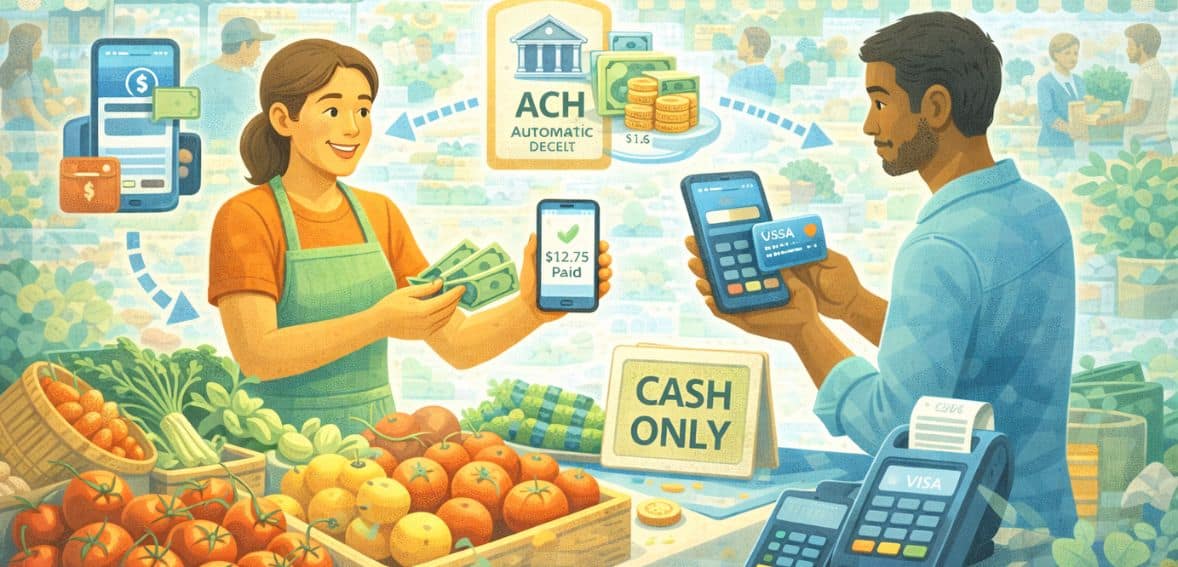
Cash has been the foundation of local marketplaces for many years. The ease of cash transactions gave rise to street festivals, farmers’ markets, flea markets, and pop-up stalls. Cash seemed simple, instantaneous, and intimate. Vendors may save paperwork, see money exchanges, and end the day with a clear understanding of their earnings.
Additionally, customers felt at ease taking bills out of their wallets. When customer behavior was predictable, local, and slow, this system was effective. However, the environment in which markets function today is extremely different. Customers arrive with phones rather than wallets, foot traffic varies, and expectations have changed.
What used to stand for simplicity and trust is now seen more and more as inconvenient. Despite its familiarity, the cash-only approach is finding it difficult to adapt to modern purchasing patterns and operational realities.
How Consumer Behavior Has Changed
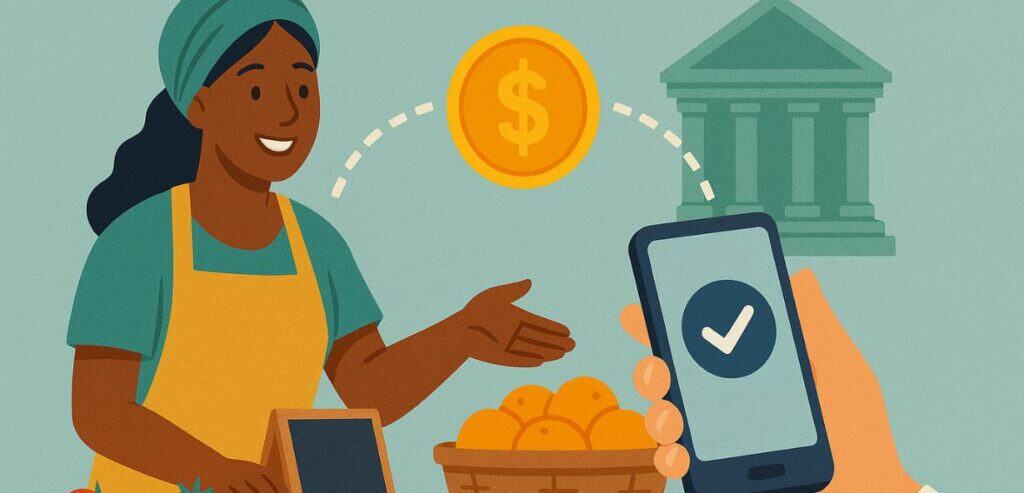
Today’s consumers are making thoughtful purchases rather than merely perusing markets for novelty. Many no longer carry cash at all. In daily life, actual currency has been supplanted by mobile wallets, cards, and contactless payments.
Customers frequently react with annoyance rather than nostalgia when they come upon a cash-only vendor. If making a payment is difficult, even customers who wish to support small companies can leave. This change reflects how people handle their finances rather than just personal preferences.
Cash lacks the tracking, security, and flexibility that digital payments provide. Market vendors who only accept cash run the danger of losing sales because their payment method confuses the decision-making process, not because their products are unappealing.
Lost Sales Happen Quietly
Being cash-only has several risks, one of which is that lost sales are imperceptible. Consumer complaints are uncommon. They just move on. Without knowing how many transactions failed at checkout, vendors may blame sluggish days on bad weather or foot traffic. Momentum vanishes when someone reaches for a phone or card and hears the words “cash only.” Conversation and product presentation create an emotional bond that instantly breaks down.
The vendor never remembers these moments, but they add up over time. Higher-priced things that cash restricts and impulsive purchases are captured by digital payments. Unknown to them, cash-only vendors frequently limit their own earning potential while thinking they are maintaining simplicity. Many cash-only vendors may not realize that frequent lost sales and unrecorded transactions contribute to negative cash flow, even when daily takings appear stable.
The Rise of Impulse and Convenience Buying
Convenience and immediacy are the driving forces behind modern consumer behavior. People expect to pay right away when they see something they want. This behavior is supported by digital payments. Cash doesn’t. Consumers are less likely to set aside money expressly for market excursions, particularly when those visits are unplanned.
Impulsive purchases are crucial for vendors who provide prepared delicacies, artisanal goods, or niche things. Conversion decreases with each extra step between desire and payment. That friction is introduced by cash-only stalls.
Vendors can meet clients in real time with digital payment choices, capturing sales that would otherwise vanish. Convenience is now a standard expectation that influences purchases everywhere, including local marketplaces; it is no longer a luxury.
Security Concerns with Handling Cash

Many sellers overlook the hazards associated with handling cash. Large funds put you at risk for loss, theft, or incorrect counting. Reconciliation at the end of the day depends entirely on human correctness. Errors are simple and can go unnoticed. Errors are more likely in crowded, hectic, and fast-paced markets. Digital payments offer automatic transaction records and lower physical risk.
Cash does not need to be transported or kept overnight in order for funds to flow safely. This security is important for small teams or lone suppliers. Knowing that money has already been deposited or monitored digitally provides a great deal of peace of mind. Although cash may seem substantial, it is fragile in ways that modern institutions are intended to guard against.
Record keeping and Financial Visibility
Financial transparency is a challenge for cash-only businesses. Without digital data, it becomes impossible to track daily revenue, identify best-selling items, and understand seasonal trends. Vendors that rely on handwritten notes or recollection are unable to see how they are performing.
In order to facilitate improved decision-making, digital payments automatically generate transaction histories. Vendors may confidently arrange inventory, compare market days, and examine sales trends. When applying for loans, permits, or microfunding opportunities that call for evidence of income, this information becomes quite valuable.
Cash transactions don’t leave much evidence. Digital records are now necessary for sustainable growth in a company climate where transparency and documentation are valued more and more. Consistent digital payment records also strengthen vendor micro-funding eligibility, since lenders and grant programs increasingly rely on verifiable transaction data rather than estimates or cash-only reporting.
Tax Compliance Is Getting Harder to Avoid

The expectations of regulations are changing. Accurate income reporting is becoming more and more required by governments and market organizers. Although cash-only sellers frequently create long-term danger, they may think they are avoiding complexity. Tax filing is difficult and prone to mistakes due to inconsistent records.
Digital payments make compliance easier by offering reports that are exportable and easy to understand. Vendors don’t have to fumble with income reconciliation throughout tax season. Compliance is about legitimacy, not just avoiding fines.
Vendors who exhibit trustworthy financial procedures are seen favorably by organizers, partners, and clients. A company that operates transparently is positioned for long-term success rather than seasonal survival.
Market Organizers Are Raising Standards
These days, a lot of market organizers promote or mandate the adoption of digital payments. Their objectives are to draw in a variety of providers, boost overall spending, and enhance the consumer experience.
Attendees may become irritated, and the flow may be disrupted by cash-only stalls. When customers depart empty-handed, or lines stall, organizers take notice. Vendors who adjust to payment expectations are in line with goals for market expansion.
Over time, those who oppose run the risk of being excluded or marginalized. Accepting payments is no longer an optional enhancement but rather a component of professional standards. Vendors are expected to operate at a level that supports the increasing market of customized experiences.
Younger Customers Expect Digital Options
The demise of currency is being accelerated by generational transitions. Younger consumers frequently see cash as antiquated or inconvenient because they were raised with digital payments. Additionally, they are more likely to recommend businesses, share their experiences online, and return.
Both the instant sale and the long-term engagement are harmed by payment friction. Digital payment acceptance by vendors is an indication of accessibility and relevance. This perception is important. It influences how people discuss and remember a company. Regardless of the caliber of their output, cash-only businesses run the danger of being seen as rigid or outdated.
Higher Average Transactions with Digital Payments
Consumers who use cards or mobile payments tend to spend more, according to numerous studies. Spending is restricted by cash to what is physically accessible. That ceiling is lifted by digital payments. This distinction is significant for suppliers offering premium products or bundles. When making payments is simple, customers are more inclined to add things, upgrade selections, or leave tips.
Without using pushy sales techniques, digital acceptance raises the average transaction size. Vendors who continue to only accept cash inadvertently limit the generosity and purchasing habits of their clients. Value perception is influenced by the payment method in addition to convenience.
Speed Matters in Crowded Markets
Markets are fueled by movement and vitality. Every second spent at the register counts when crowds grow. This flow is frequently slowed by cash transactions. Small delays that accumulate quickly include counting cash, making change, handling worn notes, and addressing shortages.
Long queues can cause customers to completely give up on purchases, especially if they are just perusing. By providing quick and reliable processing, digital payments lessen these obstacles. Line movement and low stress are maintained by a tap, scan, or card insert.
Respecting clients’ time is what speed is all about, not hurrying them. Efficient payment processing allows vendors to serve more clients per hour and improve overall customer satisfaction. Faster checkout increases sales volume and improves customer happiness in crowded markets.
Digital Payments Support Tipping and Add-Ons

To make their day profitable, a lot of market merchants rely on more than just base pricing. The difference between breaking even and making good money is frequently filled by tips, upgrades, and add-on purchases. These opportunities are inadvertently suppressed by cash-only approaches.
Consumers may be reluctant to add an item if it necessitates recounting bills, or they may wish to tip but lack extra money. This friction is eliminated by digital payment systems. When integrated into the checkout process, tip suggestions and other add-ons seem natural.
When the procedure is smooth, customers are more likely to say yes. These tiny additions add up to a substantial rise in revenue over time. Generosity can occur without embarrassment or inconvenience due to digital payments.
Building Trust Through Professionalism
Perception is shaped by payment methods. Consumers frequently link acceptance of digital payments to legality, professionalism, and dependability. A vendor’s acceptance of cards or mobile payments is an indication of their validity and accountability. This is particularly important for more expensive products because decisions to buy are influenced by trust.
Even with high-quality products, cash-only installations may inadvertently raise questions. Consumers want to know that any returns, problems, or follow-ups would be handled appropriately. Transaction logs from digital payments boost trust. Conversation and branding are not the only ways to develop trust; systems that seem safe and comfortable also help to strengthen it. Expert checkout procedures boost reputation and promote recurring business.
Access to Growth Opportunities

There are currently only a few cash-only vendors. Revenue ceases when the market closes. Beyond the stall, digital payments unlock doors. Pre-orders, deposits, special requests, and even remote payments for upcoming pickups are all accepted by vendors.
This flexibility reduces reliance on erratic foot traffic and balances revenue between events. Infrastructure is necessary for growth, and payment methods are essential. Adopting digital payments allows vendors to grow into online sales, subscriptions, or partnerships with nearby companies.
Physical presence continues to limit cash-only operations. The goal of accepting digital payments is to maintain growth possibilities for future opportunities rather than to expand right away.
Cash Can Still Exist, But Not Alone
The conversation is not about eliminating cash entirely. Cash still serves certain customers and situations. The issue arises when cash becomes the only option. Offering multiple payment methods respects customer choice and increases accessibility.
Flexibility strengthens businesses. Vendors who accept both cash and digital payments capture the widest audience without alienating anyone. Choice is not complexity; it is inclusivity. Customers appreciate businesses that adapt rather than dictate. A balanced approach preserves tradition while embracing practicality.
Redefining What It Means to Be a Market Vendor
Modern market sellers’ function at the nexus of innovation and tradition. Products may be locally obtained or made by hand, but operations must adhere to modern standards. Acceptance of payments is a component of such development. Flexibility now stands for resilience, whereas cash-only originally represented freedom.
Vendors who accept digital payments safeguard their earnings, enhance consumer satisfaction, and set themselves up for long-term success. When sellers change with their communities, markets thrive. The goal of payment flexibility is to maintain authenticity in a society that is changing, not to lose it.
Conclusion
For market merchants, cash-only previously stood for independence and simplicity, but it now places needless restrictions. Payment expectations have evolved along with customer behavior. Particularly in congested market contexts where convenience influences purchasing decisions, people demand speed, flexibility, and familiar payment methods.
Beyond just taking the place of cash, digital payments enhance checkout processes, facilitate tipping and add-ons, foster confidence, and create opportunities for expansion outside of the stall. Crucially, embracing digital payments means increasing options rather than giving up cash.
Multiple payment alternatives lower friction, stabilize revenue, and improve customer satisfaction for vendors. Successful vendors will be those who strike a balance between tradition and pragmatism as marketplaces continue to change. In a world where fewer customers carry cash, flexibility is no longer optional—it is essential for long-term sustainability and resilience.
FAQs
When a vendor only accepts cash, do customers actually stop making purchases?
Yes. Even if they want the product, a lot of clients leave because they don’t have cash.
Is it costly for small businesses to accept digital payments?
Although there are expenses, they are frequently compensated for by increased sales, quicker checkout, and fewer lost chances.
Are cash and digital payments still accepted by vendors?
Of course. To maximize client convenience, the majority of successful providers provide both.
In outdoor market environments, are digital payments dependable?
Yes. Multiple solutions are extensively utilized in markets and operate with mobile data or offline modes.
Do digital payments actually increase recurring business?
Yes. Customers are more likely to come back when the checkout process is simpler and payment preferences are saved.