
Selling at an open-air market is fast, personal, and relationship-driven—but it’s also operationally intense. You’re juggling changing weather, long lines, product variety, sampling, price changes, and customers who expect modern payment options.
That’s exactly why a farmers market POS system has become less of a “nice-to-have” and more of a competitive advantage.
A modern farmers market POS system is not just a card reader. It’s a complete workflow: quick checkout, accurate pricing, inventory tracking, digital receipts, sales reporting, customer insights, and support for benefit programs like SNAP/EBT.
Whether you’re a single vendor selling seasonal produce or a growing brand selling packaged foods, beverages, flowers, meat, eggs, baked goods, or artisan products, the right POS system at farmers markets makes your booth more efficient, more compliant, and more profitable.
This guide breaks down the biggest benefits of a farmers market POS system, how to use it in real market conditions, what features matter most, and where the technology is heading next.
Why a Farmers Market POS System Changes the Entire Checkout Experience

A smooth checkout is more than convenience—it’s revenue protection. When lines get long, shoppers abandon carts or shorten their purchase. A farmers market POS system reduces friction by making payment fast, flexible, and professional.
The biggest immediate benefit is accepting more payment types. Many shoppers prefer tap-to-pay cards, mobile wallets, or contactless payments.
With a reliable POS system at farmers markets, you can accept chip, tap, swipe (when needed), and other modern methods without improvising. That also creates trust. Customers are more comfortable spending more when the checkout feels secure and familiar.
A second benefit is speed and accuracy. Instead of calculating totals manually or using a basic calculator, your farmers market POS system adds items instantly, applies discounts correctly, and reduces mistakes. That matters when you’re selling weight-based produce, bundles like “3 for $10,” or time-sensitive specials at the end of the market day.
Finally, checkout quality affects brand perception. Digital receipts, consistent pricing, and clean itemization help you look established—even if you’re a small vendor. That perception can lead to higher average order value, more repeat customers, and better word-of-mouth.
Faster Lines Without Rushing Customers
At markets, speed doesn’t mean “push people through.” It means serving them confidently while keeping the line moving. A farmers market POS system helps by using product buttons (PLUs), favorites, barcode scanning for packaged goods, and quick-tap payment flows. Your staff can stay friendly and conversational without getting bogged down in math.
When your checkout is faster, you also gain time to educate customers: how to store produce, how to cook a new variety, or what’s coming next week. That kind of interaction builds loyalty—and it’s easier to do when the POS system at farmers markets is doing the heavy lifting.
A great practice is “line-busting.” One person handles questions and bagging while another completes transactions. Many farmers market POS system setups support multiple users, fast login, and clear permission settings so the workflow stays controlled and secure.
This reduces stress during peak hours and helps avoid the classic market problem: a line that scares away new shoppers.
Higher Sales by Accepting More Payment Options
A key reason vendors adopt a farmers market POS system is simple: people buy more when they can pay the way they want. Cash-only booths often lose sales when shoppers run out of bills or don’t want to visit an ATM. Card acceptance helps capture impulse buys and “add-on” purchases like herbs, honey, jams, eggs, or baked goods.
Beyond card payments, benefit acceptance can unlock an entire segment of customers. Farmers markets commonly support SNAP/EBT through market-operated or vendor-operated models. Training materials and program guidance show multiple approaches, including centralized market POS and vendor-level authorization.
Even when you don’t run the benefit process yourself, your booth can still benefit from a farmers market POS system because it helps you ring transactions accurately, track eligible items, and document sales cleanly.
Better Inventory and Product Control for Perishable, Seasonal Goods
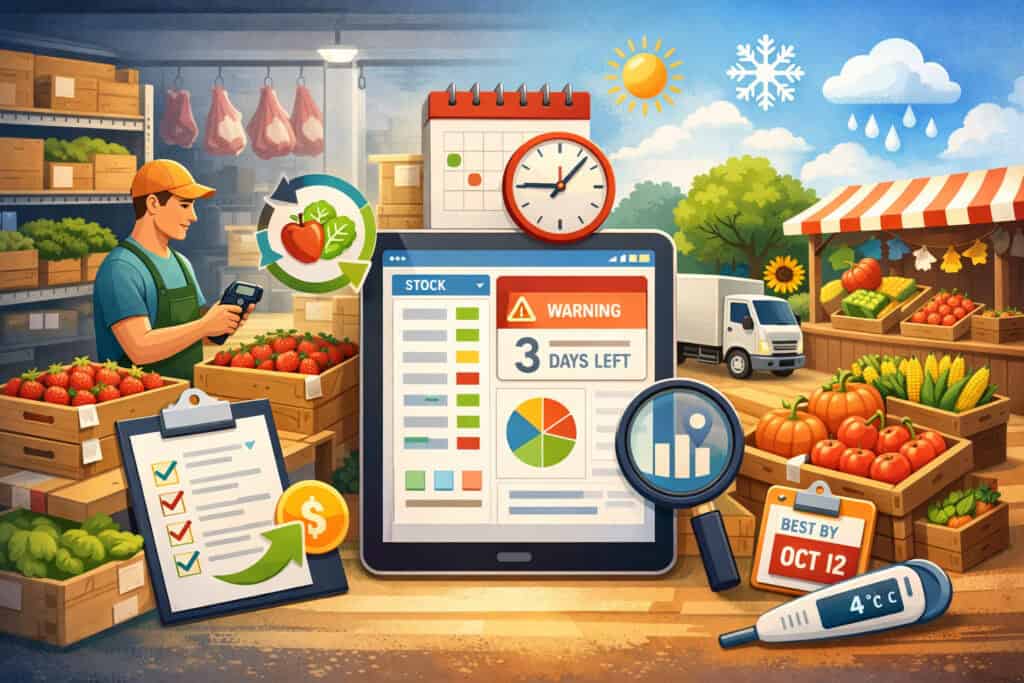
Inventory at a farmers market isn’t like a retail store. You have limited stock, fluctuating demand, and products that change week to week. A farmers market POS system gives you control without overcomplicating your operation.
Start with visibility. When each sale is recorded properly, you can see which items sell out first, which items stall, and what sells better in different weather or seasons. That turns guesswork into planning.
For example, you’ll know whether your salad greens spike early, whether tomatoes sell strongest after 10 a.m., or whether bundles outperform single-item pricing.
A strong POS system at farmers markets also helps reduce waste. If you track what you brought, what you sold, and what returned, you can forecast more accurately. Over time, that reduces leftover perishables, improves margin, and helps you plan harvest and packing schedules.
Inventory features also protect customer trust. When pricing is consistent and labels are clear, you avoid awkward disputes at checkout. It’s also easier to manage product variations like size, flavor, and packaging.
Smarter Forecasting and Less Waste
Markets punish overproduction and underproduction in different ways. Bring too little, and you sell out early—leaving money on the table and disappointing regulars. Bring too much, and you carry the product back, increasing spoilage risk.
A farmers market POS system solves this by collecting usable sales history. Over several market days, you can compare demand patterns across weeks, seasons, and special events. You can also see whether new products are growing or fading. That’s especially valuable for packaged goods where you can scale production, adjust labels, and test new flavors.
Forecasting becomes even more powerful when your POS system at farmers markets tracks categories: produce, meat, dairy, baked goods, beverages, flowers, pantry items, and so on. Category-level reporting helps you decide where to expand. It can also reveal surprises—like a high-margin add-on item quietly becoming your best profit driver.
Waste reduction is also operational. When you have real numbers, you can change packing strategy: more small bundles, fewer large units, or more “ready-to-go” bags for fast shoppers. A farmers market POS system turns that into a measurable experiment instead of a hunch.
Handling Weights, Bundles, and Variants Without Confusion
Farmers markets often sell by weight, by bunch, by basket, or by bundle. That complexity is where manual checkout breaks down. A reliable farmers market POS system can support weights (with compatible scales or manual weight entry), bundles like “mix-and-match,” and variants like “mild/medium/hot” or “small/large.”
This matters because clarity increases confidence. Customers are more likely to try new products when pricing is transparent. It also reduces errors, which protects margins—especially on items where a small pricing mistake wipes out your profit.
Variants are also essential for packaged and value-added foods. If your salsa has five flavors and two jar sizes, you don’t want the line waiting while you hunt for prices. A POS system at farmers markets lets you create a clean menu so the cashier can ring items fast and accurately.
Over time, this data becomes a product strategy. You can see which variant sells best, which bundle drives higher average tickets, and which items deserve better signage. It’s one of the most overlooked benefits of a farmers market POS system: it makes product decisions easier.
Cleaner Bookkeeping, Easier Taxes, and Better Business Decisions

Many vendors start with cash and simple notes. That works—until it doesn’t. As soon as you grow, add staff, do special events, expand product lines, or start wholesale and preorders, manual tracking becomes risky. A farmers market POS system simplifies your financial foundation.
First, it creates consistent records. Each sale is logged with date, time, items, discounts, and payment method. That makes end-of-day reconciliation straightforward. You know how much cash you should have, how much was processed by card, and what your true sales total is. That alone reduces stress after a long market day.
Second, reporting makes decisions smarter. You can compare markets, test pricing, see peak hours, and measure how weather affects performance. When you can measure it, you can improve it.
Third, financial cleanliness supports growth. If you ever apply for a small business loan, rent a commercial kitchen, add a truck, or join a new market with higher fees, you’ll be asked for sales records. A POS system at farmers markets gives you credible documentation without extra work.
End-of-Day Reconciliation Without Guesswork
The classic market headache is counting cash, matching totals, and realizing something “doesn’t add up.” A farmers market POS system reduces that by separating payment types and showing transaction counts, refunds (if any), and tips (if relevant).
This is also where staff accountability improves. With user logins and permissions, you can see who ran which transactions. That matters when you have a rotating team or seasonal help. It’s not about suspicion—it’s about clarity and training.
A strong POS system at farmers markets also makes it easier to handle discounts and promotions. You can run end-of-day reports showing exactly how many bundles sold, how many promo codes were used, and what the net effect was. That prevents the “we ran a deal but don’t know if it helped” problem.
Finally, clean reconciliation protects your time. Instead of spending hours fixing records after the market, you can focus on restocking, production, harvest planning, or marketing for the next event.
Pricing Optimization and Profit Tracking
Pricing at markets is emotional and competitive. Vendors worry about being “too expensive,” but underpricing quietly kills profitability. A farmers market POS system helps you price with confidence by tracking average sale size, item margins (when you input costs), and product performance.
Even without advanced cost tracking, sales data gives clues. If a higher-priced product sells consistently, customers see value. If a lower-priced item sells only when discounted, it may need better display, sampling, or repositioning.
Profit tracking also helps you choose where to spend time. Some vendors discover that a single high-margin add-on item contributes more profit than a whole category of labor-intensive products. With a POS system at farmers markets, those insights show up in reports instead of staying hidden.
This is also where you can predict inventory needs. If you know a specific market produces a higher average order value, you can bring more premium goods. If another market is price-sensitive, you can emphasize bundles. Data turns your farmers market POS system into a practical strategy tool, not just a checkout device.
SNAP/EBT Acceptance and Community Access
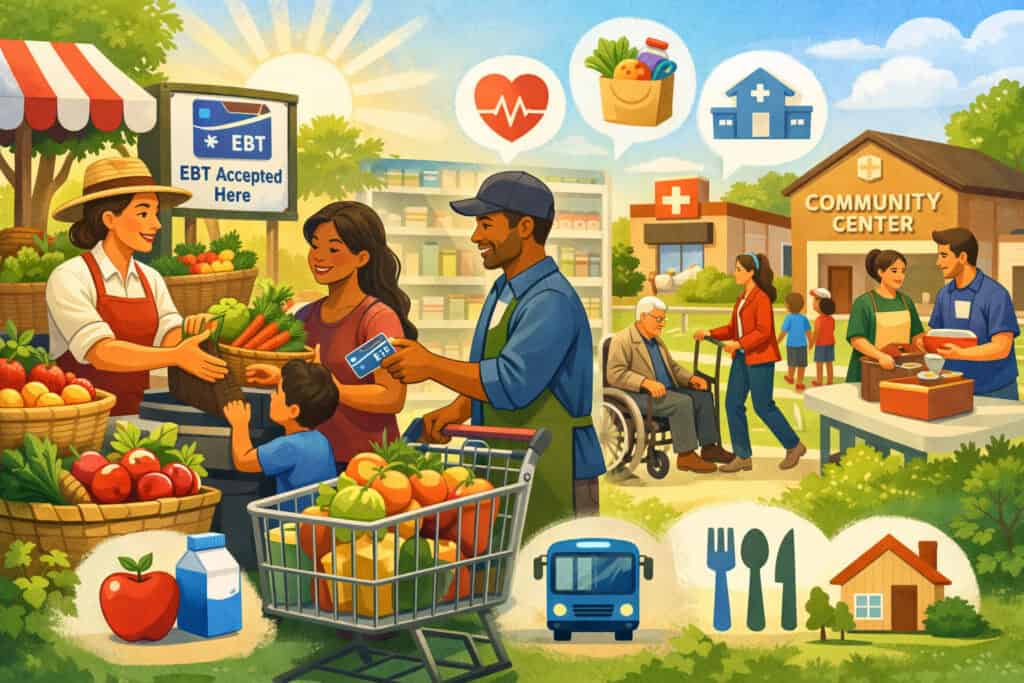
One of the most meaningful benefits of a POS system at farmers markets is expanding access. Many markets participate in nutrition programs and incentives. To do that, they need the right authorization and equipment options.
Guidance for farmers and markets shows that SNAP/EBT can be accepted through different setups, including market-operated models (central booth runs EBT and issues scrip/tokens) or vendor-operated approaches (individual vendors become authorized where applicable).
There are also participation assistance programs that help markets adopt mobile solutions. For example, USDA FNS describes support through cooperative agreements that provide access to a SNAP mobile application via MarketLink, enabling acceptance on smart devices under certain conditions.
If your goal is growth, SNAP/EBT capability isn’t only about doing good (though it does). It also expands your customer base and stabilizes demand. Vendors who serve a broader range of shoppers often see more consistent week-to-week sales.
Understanding the Most Common SNAP/EBT Models at Markets
Most markets use a structure that fits their layout and staffing. In a market-operated model, the market itself becomes the SNAP-authorized retailer, runs the EBT device at a central location, and uses tokens or scrip for shoppers to spend with vendors.
In a vendor-operated approach, individual vendors may apply for authorization and process their own EBT transactions, depending on program rules and market structure.
A farmers market POS system helps either way by keeping transactions organized. If you’re accepting scrip/tokens, your POS can ring those sales as a separate tender type. If you’re processing eligible items directly, your POS system at farmers markets helps you separate eligible vs. non-eligible items, manage receipts, and reduce confusion.
The operational benefit is big: you can participate without breaking your flow. Instead of treating benefit transactions as “special cases,” your farmers market POS system makes them part of normal checkout.
Incentive Programs and Long-Term Vendor Benefits
Many markets run incentive programs that match benefits for produce purchases, increasing buying power. These programs often use scrip systems and market info booths to distribute matched funds.
When incentives increase spending, vendors benefit directly through higher sales volume. And because these programs tend to encourage fruit and vegetable purchases, produce vendors may see strong upside. Markets also benefit by attracting more shoppers and improving community perception.
From a planning standpoint, a farmers market POS system can help you track how much of your revenue comes from different payment types. That helps you understand your customer mix and plan inventory accordingly.
Some assistance programs also support equipment access. USDA FNS describes mobile options and participation assistance that can reduce barriers for markets adopting SNAP acceptance.
This is one of the clearest “win-win” benefits of a POS system at farmers markets: it supports customer access while supporting vendor stability.
Stronger Security and Customer Trust in Modern Payments
Payment security is not optional. Shoppers may love the personal feel of a market, but they still expect professional-grade protection when paying by card. A modern farmers market POS system helps you meet that expectation.
Security starts with using EMV and contactless methods correctly. Tap and chip transactions reduce certain types of fraud compared to older swipe-only workflows. It also includes encryption, tokenization, secure device handling, and safe staff practices.
Compliance matters too. PCI DSS requirements have evolved, and sources discussing PCI DSS 4.0 note that enhanced requirements became fully applicable by 2025 for merchants and service providers involved in processing card payments.
That doesn’t mean small vendors need to become security experts—but it does mean choosing reputable providers, keeping software updated, and following basic security rules.
A POS system at farmers markets also helps reduce risk by limiting manual card handling. The less a human touches sensitive data, the better. Digital receipts and secure payment flows protect both the customer and your business reputation.
Building Trust With Professional Checkout Practices
Customers decide quickly whether a booth feels trustworthy. A stable card reader, clear pricing, and a clean receipt experience make shoppers more comfortable buying more.
A farmers market POS system helps by creating predictable interactions. The customer sees the amount, taps their card, and gets a receipt. That reduces chargeback disputes and “I think I was overcharged” confusion. It also makes refunds or adjustments easier when you need to keep goodwill.
Staff habits matter as well. A good POS setup supports PIN entry privacy, prevents staff from writing down card numbers, and reduces mishandling. When your checkout is professional, shoppers are more likely to return and recommend you.
This trust also impacts partnerships. If you supply restaurants or retailers, they want vendors who run a clean operation. Having a reliable POS system at farmers markets signals you take business seriously.
PCI DSS 4.0 and What Market Vendors Should Do
Many vendors hear “PCI compliance” and assume it’s only for big retailers. In reality, it affects any business that accepts card payments. Commentary on PCI DSS 4.0 highlights that more stringent requirements became mandatory by 2025.
Practically, for a market vendor using a farmers market POS system, that translates into a few simple actions:
- Keep devices updated and use reputable payment providers.
- Avoid using unknown hardware or sketchy dongles.
- Use strong passwords on POS apps and phones/tablets.
- Restrict staff access with user roles where possible.
- Don’t store card numbers or sensitive authentication data.
Most vendors can stay compliant by using approved hardware and following provider guidance. The benefit is peace of mind. Security isn’t just about avoiding fraud—it’s about protecting the reputation you’ve built one customer at a time.
Marketing, Loyalty, and Repeat Sales Beyond Market Day
The best market businesses don’t rely only on foot traffic. They build a customer list, create repeat buyers, and sell between markets. A farmers market POS system supports that by turning one-time purchases into ongoing relationships.
Digital receipts are a simple start. Instead of handing out paper (that gets lost), you can offer email or text receipts. That opens the door to permission-based marketing: product updates, preorders, seasonal announcements, and special events.
Some POS tools support loyalty programs. Even a basic “buy 10, get 1 free” structure can work well for coffee, baked goods, juices, or pantry items. Loyalty increases repeat visits and stabilizes revenue.
Customer insights are another advantage. When you see what sells together, you can build bundles intentionally. You can also plan sampling and signage. A POS system at farmers markets gives you practical data that improves merchandising.
Building a Customer List the Right Way
Markets are relationship-driven, so list-building should feel natural. A farmers market POS system helps by making receipt opt-ins seamless. Your staff can ask, “Would you like a digital receipt?” That’s a customer-friendly question, not a pushy sales pitch.
Over time, your list becomes one of your most valuable assets. It helps you communicate weather-related changes, new product launches, and sold-out updates. It can also support preorders, which reduce uncertainty and improve production planning.
The key is consent. You want customers who truly want your updates. A solid POS system at farmers markets supports this by capturing contact details through compliant, permission-based flows.
This also helps with brand identity. When customers see consistent messaging and professional receipts, they remember you. That matters in a busy market where shoppers visit dozens of booths.
Preorders, Subscriptions, and Expanding Revenue Streams
Many vendors now sell through preorders, weekly bundles, and subscription-style offerings. Whether you call it a “market pickup box” or a produce bundle, this model smooths demand.
A farmers market POS system supports this by tracking orders, managing item availability, and recording payment cleanly. It also reduces day-of chaos: customers pick up quickly, lines move faster, and you can focus on new shoppers.
Subscriptions are especially useful for CSA-style offerings, baked goods preorders, and rotating seasonal bundles. They stabilize cash flow and improve planning.
This is a major benefit of using a POS system at farmers markets: it expands your business beyond the limited hours of market day. You stop depending only on foot traffic and start building predictable revenue.
Hardware, Connectivity, and Reliability in Outdoor Conditions
Market conditions are unpredictable. Sun glare, wind, dust, weak signal, and battery drain can ruin a checkout setup that works perfectly indoors. A farmers market POS system must be designed for mobility and resilience.
Start with power. Battery packs, charged devices, and backup cables are essential. A tablet-based POS should have a stable stand and protection against tipping. Printers can be optional, but if you use them, make sure they’re portable and weather-safe.
Connectivity is the next challenge. Some vendors rely on cellular data, others use mobile hotspots, and some markets offer Wi-Fi. The best approach is redundancy. If your signal drops, your POS should have offline capabilities or quick recovery so you don’t lose sales.
If you accept benefit programs, equipment options and models vary. USDA resources describe EBT equipment options for markets, including smartphone/tablet-based approaches and scrip systems.
The Best Setup for Speed and Stability
A stable setup is not about being fancy—it’s about avoiding failure. The most practical POS system at farmers markets configuration usually includes:
- A tablet or phone with a bright screen and protective case.
- A reliable card reader that supports tap and chip.
- A stable stand or mount for quick interaction.
- A portable battery solution and backup charging.
- A connectivity plan with hotspot backup.
This reduces friction and protects sales. The smoother your setup, the more confident your staff feels, and the more professional your booth appears.
Speed also improves when everything has a place. If the reader is always on the same side, if your product menu is well organized, and if your receipts are digital by default, the checkout becomes almost automatic.
That’s a hidden benefit of a farmers market POS system: it creates a repeatable process. In a chaotic environment, repeatable processes are a competitive edge.
Offline Mode, Receipts, and Backup Plans
Even strong markets have dead zones. If your POS requires constant internet, you risk losing sales. A stronger POS system at farmers markets supports offline transactions (where allowed), queues payments, or provides a smooth reconnect flow.
Receipts matter too. Digital receipts reduce paper clutter and keep your booth tidy. They also help customers remember you, especially if your receipt includes your business name.
Backup plans should be non-negotiable. Keep a small amount of cash for emergencies. Have a manual price list available. Train staff on what to do if a device fails. A farmers market POS system is powerful, but resilience comes from planning.
The goal is simple: no lost sales, no panicked moments, and no long line because “the reader isn’t working.”
Future Predictions: Where Farmers Market POS Technology Is Headed
The next generation of the farmers market POS system is moving toward more automation, more mobility, and more integration. Vendors will increasingly expect their POS to connect everything: in-person checkout, online preorders, inventory, customer messaging, and accounting.
One major trend is phone-based acceptance. As device capabilities improve, “tap-to-pay on phone” setups will keep reducing hardware needs. This will be especially appealing for new vendors and seasonal sellers who want a lower barrier to entry.
Another trend is smarter reporting. POS platforms are adding more insight: product performance by time window, forecasting suggestions, and reminders for low stock. Some tools will use automation to recommend how much to bring next week based on history, weather, and event schedules.
Benefit program tools will also continue improving. USDA resources already describe smartphone/tablet pathways and participation assistance that lower barriers for mobile acceptance.
As markets expand access programs and incentive systems, vendors will benefit from POS tools that handle eligibility, tender types, and reporting cleanly.
Finally, security and compliance will keep tightening. With PCI DSS 4.0 requirements emphasized as fully applicable by 2025 in card processing ecosystems, vendors will continue moving toward more secure, modern payment methods and reputable providers.
What This Means for Vendors in the Next 2–5 Years
Vendors who treat the POS system at farmers markets as a core business system—not just a payment tool—will have a major advantage.
You’ll be able to:
- Run faster lines with fewer staff.
- Sell beyond market day through preorders and subscriptions.
- Use data to plan inventory and reduce waste.
- Expand payment acceptance, including benefit-driven purchasing.
- Operate more securely with less manual handling.
The future will reward vendors who combine the old strengths of markets (relationships, quality, trust) with modern execution (speed, convenience, and accurate systems). A strong farmers market POS system is the bridge between those two worlds.
FAQs
Q.1: What is the best POS system at farmers markets for a small vendor?
Answer: The best POS system at farmers markets is the one that matches your booth reality: quick setup, fast checkout, strong mobile connectivity, and simple product buttons. If you sell packaged goods, barcode support helps.
If you sell produce, flexible pricing and bundles matter. Also consider reporting quality and whether the platform fits your growth plans like preorders or subscriptions. A great farmers market POS system should feel easy on day one and still support you when you scale.
Q.2: Can a farmers market POS system work without the internet?
Answer: Some platforms support offline workflows, but capabilities vary. If your signal is unreliable, choose a farmers market POS system with a proven offline or “store and forward” approach, and always keep a backup plan (hotspot, charged phone, small cash reserve). Outdoor selling is unpredictable, so resilience is part of your POS decision.
Q.3: How do SNAP/EBT transactions work at farmers markets?
Answer: Many markets use a central booth that accepts EBT and issues tokens or scrip for shoppers to spend with vendors. Other setups involve vendor-level participation depending on program rules.
USDA FNS resources describe EBT equipment options and approaches for markets, including smartphone/tablet-based options and scrip systems. A POS system at farmers markets can help you track these tender types cleanly.
Q.4: Is a farmers market POS system secure for customers?
Answer: A reputable farmers market POS system supports modern secure payment methods (chip and contactless), encryption, and provider-level security controls.
Merchants should also follow basic PCI-related best practices, and commentary on PCI DSS 4.0 highlights enhanced requirements becoming fully applicable by 2025. In practice, using trusted hardware and keeping devices updated goes a long way.
Q.5: How does a POS system help me sell more at the market?
Answer: A farmers market POS system helps you sell more by reducing lost sales from cash-only limitations, speeding up lines, enabling impulse purchases, and improving trust.
It also increases repeat sales when you use digital receipts and customer follow-ups. Over time, reporting helps you stock better, price smarter, and build bundles that increase average order value.
Conclusion
The biggest benefit of using a POS system at farmers markets is control. You control checkout speed, pricing accuracy, payment acceptance, recordkeeping, and the customer experience. That control leads directly to higher revenue, lower stress, and better decision-making.
A modern farmers market POS system helps you capture more sales by accepting the payment types shoppers prefer and by keeping lines moving. It helps you reduce waste through better inventory visibility. It strengthens trust with professional receipts and secure checkout.
It supports community access through benefit-related workflows and market models described by USDA resources. And it prepares your business for a future where security expectations and compliance standards keep rising.