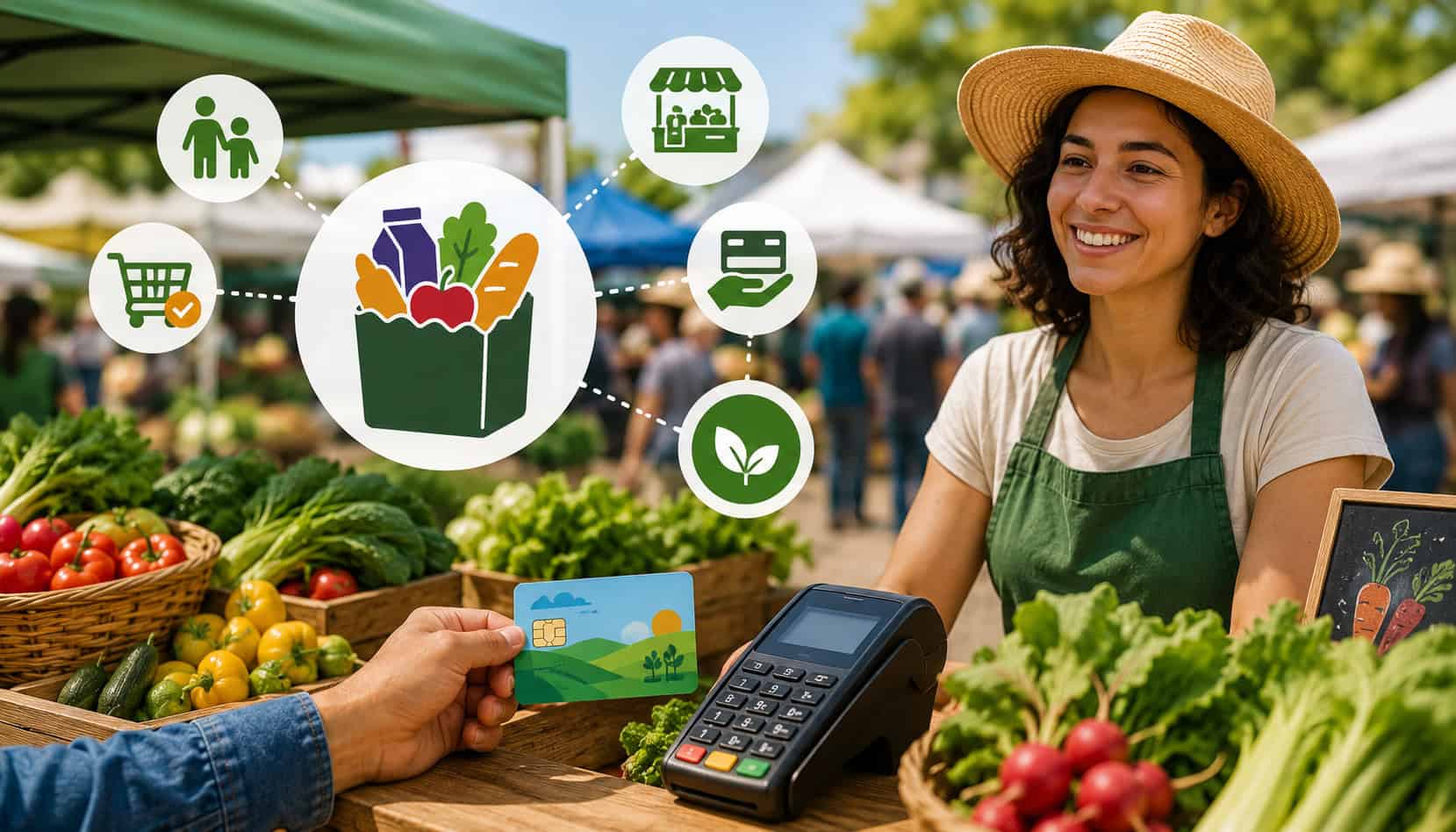
Farmers markets are built around access: access to fresh produce, locally made foods, seasonal ingredients, and the people who grow or prepare them. Accepting EBT card payments can make that access stronger by allowing more shoppers to purchase eligible food items directly from vendors.
A strong SNAP benefits acceptance guide for farmers markets helps market managers and vendors understand the full picture: authorization, payment equipment, eligible products, mobile checkout tools, vendor training, receipts, records, and SNAP compliance.
It also helps create a smoother customer experience, especially in busy outdoor environments where lines, weather, weak internet, and product questions can slow down checkout.
SNAP EBT for farmers markets is not just about adding another payment type. It is about building a checkout process that is accurate, respectful, and easy to use. Vendors need to know which foods qualify, how EBT card payments are processed, how to handle split payments, and how to keep records for reconciliation.
Modern farmers market SNAP payment processing often uses mobile EBT terminals, wireless card readers, or farmers market POS systems that can support eligible product categories, receipts, and reporting. When set up correctly, these tools can help vendors serve more shoppers while reducing confusion at the point of sale.
According to the official Food and Nutrition Service guidance, SNAP benefits may generally be used for foods such as fruits, vegetables, meat, poultry, fish, dairy products, breads, cereals, other household foods, and seeds or plants that produce food. Benefits generally cannot be used for alcohol, tobacco, hot foods, household supplies, or non-food items.
What Does SNAP Benefits Acceptance Mean for Farmers Markets?
SNAP benefits acceptance means a farmers market, market operator, or approved vendor can process EBT card payments for eligible food items through an authorized payment setup. In practice, this allows shoppers to use their benefits at market booths, centralized market checkout stations, or vendor-specific terminals, depending on how the market is organized.
For farmers markets, the process usually starts with authorization. A market or vendor must be approved to accept SNAP before processing transactions.
After approval, the market needs a SNAP payment system that can securely read an EBT card, allow PIN entry, authorize the purchase, and produce a transaction record. This may involve mobile EBT terminals, farmers market POS systems, or other approved payment equipment.
Accepting SNAP benefits at farmers markets also requires clear product separation. Eligible food items must be treated differently from non-eligible items.
For example, fresh tomatoes, eggs, bread, meat, packaged jam, and seeds for food production may qualify, while hot prepared meals, decorative flowers, soap, candles, tobacco, and household goods generally do not.
A successful setup also includes operational rules. Vendors need to know how to answer customer questions, process eligible purchases, provide receipts, handle refunds correctly, and reconcile daily totals. The goal is not only to accept EBT card payments, but to create a reliable system that protects the shopper, the vendor, and the market.
For broader payment setup guidance, see this resource on farmers market point-of-sale systems, which explains mobile checkout, reporting, card readers, and outdoor market payment tools.
Why Farmers Markets Should Consider SNAP EBT Acceptance
Accepting SNAP benefits can help farmers markets become more accessible, inclusive, and practical for shoppers who rely on EBT cards for groceries. Many shoppers visit markets for fresh fruits, vegetables, eggs, baked goods, meat, dairy, and other staple foods.
When EBT acceptance for market vendors is available, those shoppers can buy directly from local producers instead of being limited to traditional retail stores.
For vendors, farmers market EBT processing can support stronger sales opportunities. A shopper who cannot use their EBT card may leave without buying, even if the vendor has eligible products.
When the market supports EBT card payments, more customers can complete purchases on the spot. This can be especially valuable for produce vendors, bakeries, dairy sellers, meat vendors, and packaged food producers.
SNAP EBT for farmers markets also improves payment flexibility. Markets often serve shoppers who use a mix of cash, debit cards, credit cards, mobile wallets, and EBT cards. A flexible checkout environment reduces friction and helps customers feel welcome.
It also supports market managers who want better reporting, vendor accountability, and more organized daily reconciliation.
There is also a community benefit. Farmers markets often serve as important food access points. By accepting SNAP benefits, markets can help connect households with fresh, seasonal foods while supporting local agriculture and small food businesses.
| SNAP Acceptance Area | What It Means | Why It Matters |
| Authorization | The market or vendor receives approval to accept SNAP EBT | Required before processing benefit transactions |
| Eligible food rules | Vendors sell only approved items through SNAP | Helps avoid compliance problems |
| Payment equipment | EBT-capable terminals or POS tools process transactions | Enables secure card use and PIN entry |
| Vendor training | Staff understand products, receipts, refunds, and records | Reduces checkout mistakes |
| Reporting | Daily sales and EBT totals are tracked | Supports reconciliation and compliance |
| Customer experience | Shoppers see clear signs and receive respectful assistance | Builds trust and keeps lines moving |
SNAP EBT for Farmers Markets
SNAP EBT for farmers markets works by allowing eligible shoppers to use an EBT card at checkout in a way that resembles a PIN-based debit transaction. The shopper selects eligible food items, presents the card, enters a PIN, and the payment system authorizes the transaction if funds are available and the setup is active.
The exact checkout flow depends on the market model. Some markets use a central information booth where shoppers swipe their EBT card and receive tokens or vouchers to spend with participating vendors.
Others allow individual vendors to process EBT card payments directly using mobile EBT terminals or farmers market POS systems. Each model requires clear controls so benefits are used only for eligible food items.
The right setup matters because outdoor markets face unique challenges. Vendors may be spread across a large area, internet access may vary, and checkout must be quick enough to handle peak shopping periods. Reliable equipment, trained staff, and clear signage help make the process smoother for everyone.
Eligible Food Items
Eligible food items are the foundation of SNAP compliance. At farmers markets, common eligible products may include fresh fruits, vegetables, herbs for food use, meat, poultry, fish, eggs, dairy products, breads, cereals, baked goods intended for home consumption, packaged foods, non-alcoholic beverages with appropriate labeling, and seeds or plants that produce food for the household.
This is especially relevant for produce-heavy markets. Apples, greens, potatoes, onions, berries, squash, mushrooms, tomatoes, carrots, and similar foods are typically straightforward examples. Meat, cheese, milk, yogurt, eggs, honey, grains, dry beans, pasta, and packaged sauces may also qualify when sold as food for home use.
Vendors should avoid guessing when a product is unusual. A packaged cold food item may qualify, while a hot ready-to-eat version may not. A potted herb intended for cooking may qualify, while an ornamental plant may not.
When in doubt, vendors should check official guidance or ask the market manager before processing the item through SNAP payment systems.
Non-Eligible Items
Non-eligible items are just as important as eligible ones because incorrect sales can create compliance risk. SNAP benefits generally cannot be used for beer, wine, liquor, cigarettes, tobacco, hot foods, foods meant to be eaten immediately at the point of sale, vitamins, medicines, supplements, live animals, pet food, cleaning supplies, paper goods, cosmetics, or other household products.
At farmers markets, common non-eligible products may include hot prepared meals, hot coffee sold for immediate drinking, ready-to-eat food truck items, cut flowers, decorative plants, soaps, candles, crafts, pottery, apparel, pet treats, and household goods. Vendors who sell both eligible and non-eligible items need a checkout process that separates them clearly.
This is where product categories in farmers market POS systems can be helpful. Vendors can label eligible products, restrict EBT tender to approved items, and use split payments when a basket includes both eligible and non-eligible goods. Clear labeling also helps staff explain the rules politely without slowing down the line.
How Farmers Market SNAP Payment Processing Works
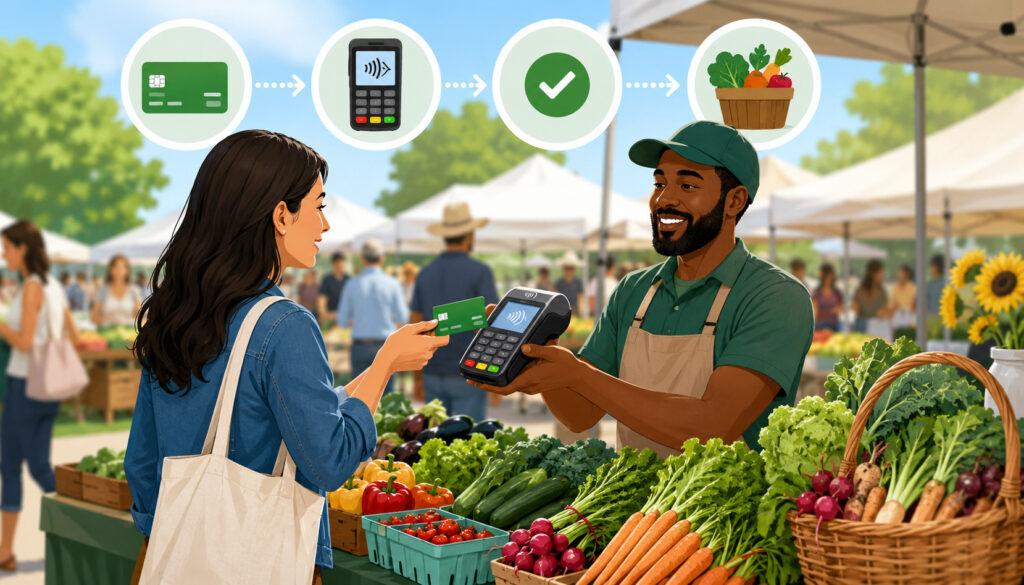
Farmers market SNAP payment processing usually follows a simple sequence: the shopper chooses eligible food items, the vendor or market cashier enters the purchase amount, the shopper swipes or inserts the EBT card, the shopper enters a PIN, the transaction is authorized, and a receipt or transaction record is generated.
Behind that simple flow, however, the market needs reliable systems for authorization, settlement, reporting, and reconciliation.
Authorization confirms that the card is valid and that the shopper has enough available benefits for the purchase. Because EBT card payments require secure PIN entry, vendors need equipment designed for EBT processing rather than a basic card reader that only accepts credit or debit.
Some setups use dedicated mobile EBT terminals, while others use integrated farmers market POS systems with EBT support.
After authorization, vendors should provide a receipt when required or requested. Receipts help shoppers confirm the amount charged and help vendors keep records. At the end of the market day, vendors or managers should reconcile EBT totals against POS reports, terminal batches, token redemptions, or booth-level sales logs.
Split payments are common. A shopper may buy eligible produce with EBT and pay for flowers, hot food, or handmade goods with another payment method. A good checkout process should make that separation easy. Staff should ring eligible food items first or use product categories that separate eligible and non-eligible purchases automatically.
Reporting matters because farmers market EBT processing is not only a payment function; it is also a compliance responsibility. Vendors should maintain transaction records, refund documentation, product category controls, and settlement reports. These records help resolve disputes, spot errors, and support responsible market operations.
For more on reducing checkout disruptions, see this guide to reducing payment declines at farmers markets.
Equipment Needed to Accept SNAP Benefits
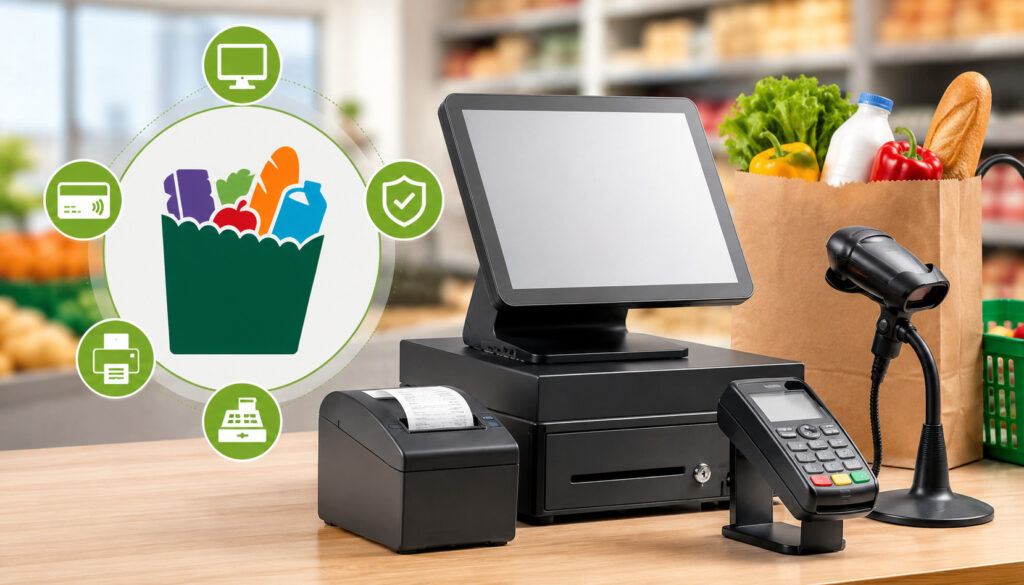
The equipment needed to accept SNAP benefits depends on whether the market uses a centralized checkout model, individual vendor processing, or a hybrid system.
At minimum, the setup must support secure EBT card reading, PIN entry, transaction authorization, and receipts or records. Many markets also benefit from mobile connectivity, battery backup, reporting tools, and POS software that can organize eligible items.
Mobile EBT terminals are common because farmers markets are often outdoors, temporary, and spread across multiple booths. A portable terminal allows vendors or market staff to process transactions without a fixed checkout counter. The terminal should be durable, easy to charge, simple to operate, and able to connect through Wi-Fi or cellular service where available.
Farmers market POS systems can add more structure. A POS system may help vendors create product catalogs, mark eligible food items, split payments, print or send receipts, track inventory, and generate end-of-day reports. This is useful for vendors who sell a mix of eligible and non-eligible products or who want better insight into sales trends.
Other practical equipment includes:
- Backup battery packs or charging stations
- Receipt printers or digital receipt options
- Mobile hotspots or secondary internet access
- Weather-resistant cases or stands
- Staff instructions near the checkout area
- Signage that shows EBT is accepted
- Daily reconciliation sheets or POS reports
Markets should also consider the physical checkout experience. Equipment should be easy for shoppers to reach, PIN entry should feel private, and lines should move without confusion. Outdoor markets often operate in bright sun, rain, wind, heat, or cold, so durability and battery life matter as much as software features.
For a broader look at mobile tools, see this guide to contactless payment options for farmers market vendors.
Mobile EBT Terminals
Mobile EBT terminals are useful because they bring payment acceptance directly to the booth, market tent, or information table. Unlike fixed countertop equipment, portable terminals can move with vendors and work in tight or temporary spaces. This flexibility is especially helpful for seasonal markets, roadside stands, pop-up farm sales, and multi-vendor events.
A good mobile EBT terminal should support secure PIN entry, reliable connectivity, clear transaction prompts, and readable receipts. Battery life is also important. A vendor should not lose the ability to process EBT card payments halfway through a busy market day because the device was not charged or because there is no backup power.
Markets should test terminals before opening. Staff should know how to start a transaction, cancel an incorrect sale, reprint a receipt if available, check connectivity, and handle basic error messages. A short practice session before market day can prevent long lines and customer frustration.
POS Systems With EBT Support
POS systems with EBT support can make SNAP payment systems more organized, especially for vendors with many products. Instead of manually deciding eligibility at every sale, vendors can assign product categories in advance.
Fresh produce, packaged bread, eggs, dairy, meat, and seeds for food production can be marked appropriately, while non-food items and hot prepared foods can be excluded from EBT tender.
This helps with split payments. If a customer buys eligible vegetables and a non-eligible bouquet, the POS can separate the basket so the eligible amount is paid with EBT and the remaining balance is paid with cash, debit, credit, or another method. That reduces manual math and lowers the risk of charging SNAP benefits for restricted items.
A POS system can also support better reporting. Vendors can review EBT sales totals, product-level sales, refunds, and daily batches. For market managers, these reports may help identify training needs, reconcile token programs, or understand how SNAP acceptance affects market traffic and vendor sales.
Step-by-Step Guide to Accepting SNAP at Farmers Markets
A practical SNAP benefits acceptance guide for farmers markets should start with eligibility and end with daily operations. The process is manageable when broken into clear steps.
First, determine who will be authorized to accept SNAP. In some markets, the market organization applies and operates a central EBT booth. In others, individual vendors apply and process their own transactions. The right model depends on market size, vendor mix, staffing, budget, and shopper volume.
Second, complete the required authorization process before accepting benefits. Vendors and markets should review official requirements, prepare business information, and confirm that eligible food sales are part of the operation. No market should process SNAP benefits before approval.
Third, choose farmers market EBT processing equipment. Consider whether the market needs mobile EBT terminals, integrated POS systems, receipt printers, token tracking, or multi-vendor reporting. Outdoor markets should prioritize wireless operation, battery life, and reliable connectivity.
Fourth, create product categories. Vendors should separate eligible food items from non-eligible products before the first transaction. This is especially important for vendors selling both food and non-food items, or both cold packaged foods and hot prepared foods.
Fifth, train everyone involved in checkout. Staff should know how to process EBT card payments, explain eligible food rules, handle split payments, issue receipts, record refunds, and respond to common error messages.
Sixth, test transactions before market day. Run a small test purchase, check receipts, verify reports, and confirm that settlement and reconciliation processes are clear.
Seventh, review performance after each market. Look for checkout delays, incorrect product categories, device issues, customer questions, and reporting gaps. Small improvements each week can make EBT acceptance easier and more reliable.
For vendors comparing payment setups, this resource on products and payment solutions for market sellers may be useful.
SNAP Compliance for Farmers Market Vendors
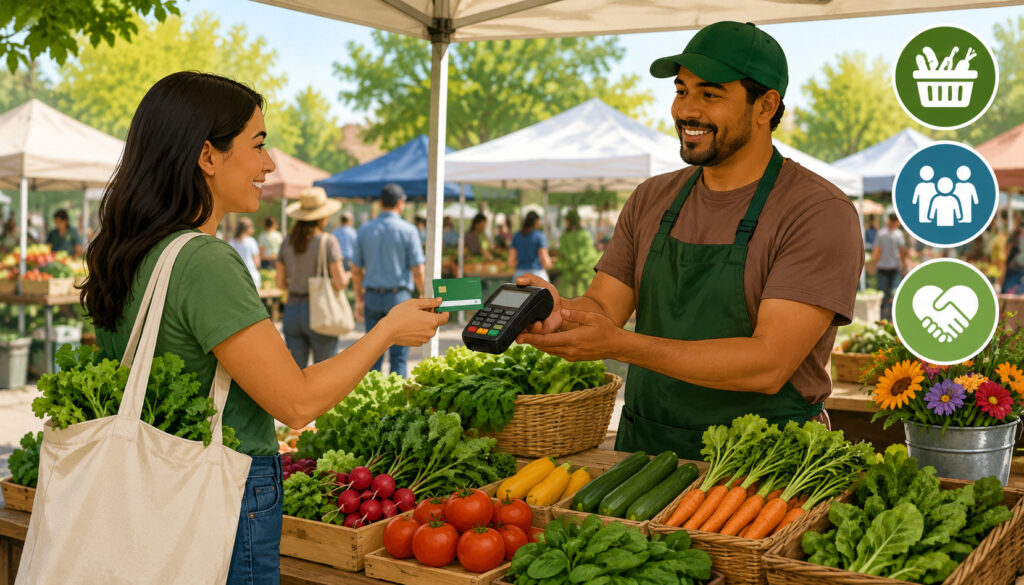
SNAP compliance begins with selling only eligible food items through EBT transactions. Vendors should understand what qualifies, what does not, and how to handle mixed baskets. Compliance is not just a paperwork issue; it is part of daily checkout behavior.
Accurate receipts are important. A shopper should be able to see the transaction amount, and the vendor should be able to confirm what was sold. If the POS system can itemize eligible products, that is helpful. If the setup only records a total, vendors should keep supporting sales records that match their market process.
Staff training is essential. Every person who handles checkout should know the basic eligible item rules. They should also know what to do when a shopper asks whether an item qualifies. A calm, consistent answer helps avoid embarrassment and keeps the line moving.
Refunds require care. Vendors should not provide cash refunds for SNAP purchases. Refunds should be handled through the approved EBT process or according to applicable program rules. Staff should document refunds clearly so daily records remain accurate.
Transaction records should be kept in an organized way. Vendors may need terminal reports, POS exports, receipt copies, token logs, or reconciliation sheets. Market managers should create a consistent system so vendors are not inventing their own processes under pressure.
Common Challenges With EBT Acceptance at Farmers Markets
The most common challenges with EBT acceptance at farmers markets are operational, not conceptual. Vendors usually understand the value of accepting SNAP benefits, but outdoor environments can make payment processing harder.
Weak internet is a frequent issue. Markets may operate in parks, lots, streets, or rural spaces where Wi-Fi is unreliable and cellular signals vary by carrier. Because EBT transactions often require real-time authorization, vendors should test connectivity at the actual booth location, not just at home or in an office.
Device issues are another challenge. Terminals may lose charge, apps may need updates, printers may run out of paper, or card readers may disconnect from phones. A pre-market checklist can prevent many of these problems.
Split payments can also create confusion. A shopper may have eligible produce, non-eligible flowers, and hot food in the same purchase. Vendors need a clear process for separating the EBT-eligible amount from the remaining balance.
Product eligibility questions can slow checkout. Staff may be unsure whether a packaged sauce, herb plant, cold prepared food, or bakery item qualifies. Vendors should review uncertain products before opening rather than deciding during a line.
Customer questions should be handled respectfully. Some shoppers may be new to using EBT at a farmers market and may not know whether they should visit a central booth, pay vendors directly, or ask for tokens. Clear signage and patient staff make a major difference.
Vendor training gaps can create inconsistent experiences. If one vendor understands EBT acceptance and another does not, shoppers may receive conflicting answers. Market managers should standardize training across all participating vendors.
Best Practices for Smooth SNAP Checkout
Smooth SNAP checkout starts before the market opens. Vendors should charge devices, confirm connectivity, check receipt supplies, review product categories, and make sure staff know who to contact if something goes wrong. A five-minute checklist can prevent many checkout delays.
Clear signage is one of the easiest improvements. Signs should show that EBT is accepted and explain where shoppers should go. If the market uses a central booth, signage should direct customers there. If vendors accept EBT directly, booth signs should make that clear.
Product categories should be accurate. Vendors using farmers market POS systems should label eligible food items correctly and review new products before adding them to the catalog. This is especially important for seasonal items, prepared foods, and mixed product bundles.
Receipts should be available. Printed receipts, digital receipts, or transaction records help customers confirm their purchase and help vendors reconcile totals. For markets with token systems, token logs should be handled carefully and counted consistently.
Daily reconciliation should be routine. Vendors should compare terminal totals, POS reports, receipts, refunds, and cash/card sales before leaving the market. Waiting several days makes errors harder to find.
Backup plans are also important. A vendor should know what to do if the terminal fails, the internet drops, or a staff member is unsure about eligibility. Backup internet, spare chargers, printed instructions, and a manager contact can keep the market operating.
Can farmers markets accept SNAP benefits?
Yes. Farmers markets can accept SNAP benefits when the market or participating vendors are properly authorized and use approved EBT payment systems. The market may use a central checkout booth, direct vendor processing, or a hybrid model depending on its structure.
What equipment is needed to accept EBT?
Vendors typically need an EBT-capable terminal or POS system that supports secure card reading, PIN entry, authorization, and receipts. Outdoor markets may also need mobile connectivity, battery backup, receipt paper, signage, and reporting tools.
What products are SNAP eligible at farmers markets?
Common eligible food items include fruits, vegetables, meat, poultry, fish, dairy products, breads, cereals, packaged foods for home use, and seeds or plants that produce food. Vendors should review official guidance for unusual or mixed products.
Can vendors accept SNAP without the internet?
Some payment tools may offer limited offline features for certain payment types, but EBT transactions generally depend on secure authorization. Vendors should not assume offline EBT acceptance is available. Test the exact equipment and processor before market day.
How do split payments work?
Split payments separate eligible and non-eligible items. The eligible food portion is paid with EBT, and the remaining balance is paid with another method such as cash, debit, credit, or mobile wallet. POS systems with product categories can make this easier.
Do farmers markets need special approval?
Yes. Markets or vendors must be authorized before accepting SNAP benefits. Approval requirements depend on the operating model and the type of food business. Vendors should complete authorization before advertising EBT acceptance.
Can SNAP be used for hot food?
Generally, SNAP benefits cannot be used for hot foods or foods intended for immediate consumption at the point of sale. This is especially important for vendors selling both cold packaged foods and hot prepared meals.
Conclusion
A SNAP benefits acceptance guide for farmers markets helps vendors and market managers understand eligibility, authorization, payment equipment, SNAP compliance, reporting, and checkout best practices.
With the right planning, accepting SNAP benefits at farmers markets can improve customer access, support local food sales, and create a more flexible payment experience.
The strongest setups combine clear eligible food rules, reliable mobile EBT terminals, practical vendor training, accurate receipts, and organized reconciliation. Farmers market SNAP payment processing works best when shoppers know where to pay, vendors know what qualifies, and the checkout system supports both speed and accuracy.
Disclaimer: This article is informational only and is not regulatory advice. Markets and vendors should review current official program guidance and consult appropriate advisors before implementing or changing SNAP acceptance procedures.