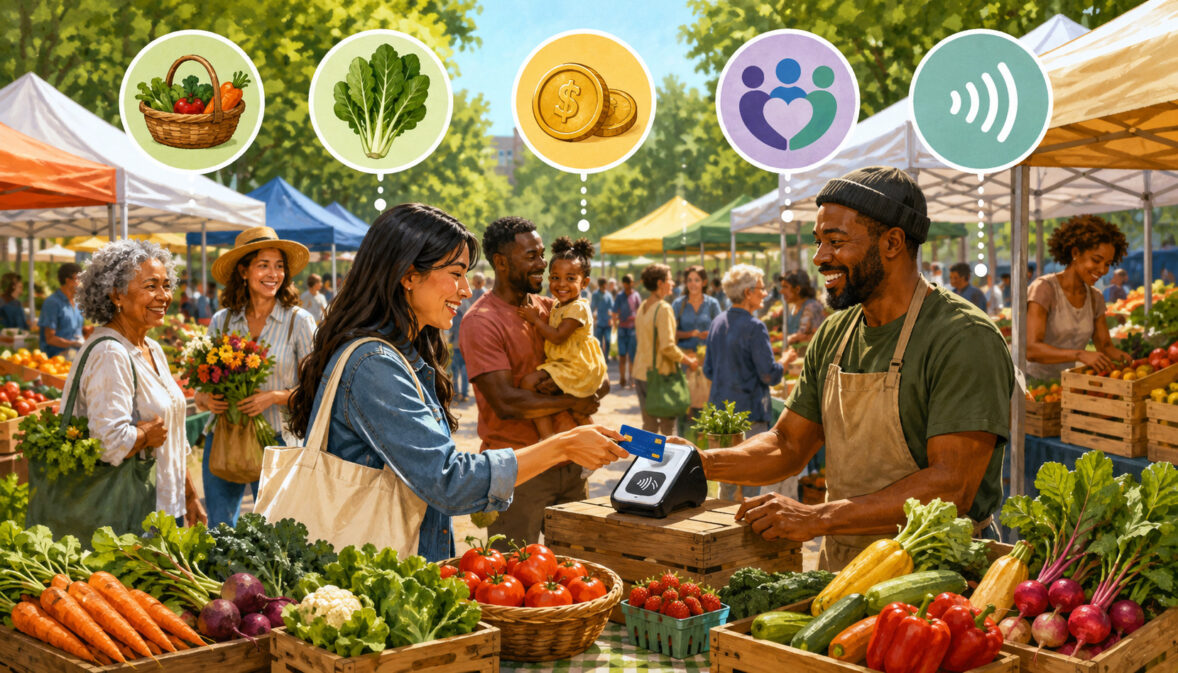
Farmers markets connect local growers and food producers with people who want fresh, seasonal products. However, a market can only serve its community fully when shoppers have practical ways to pay for those products. Accepting benefits through electronic benefits transfer can help close that gap.
The benefits of accepting SNAP at farmers markets extend beyond adding another payment method.
SNAP acceptance can help eligible shoppers purchase fruits, vegetables, meats, dairy products, breads, seeds, and other qualifying foods while creating new sales opportunities for farmers and food vendors. It can also help market managers build a more inclusive community market.
For vendors, SNAP EBT acceptance may provide access to customers who previously could not shop regularly at the market. For market organizers, it can support food access goals, nutrition initiatives, and stronger relationships with community organizations.
Successful participation requires planning. Markets must understand authorization requirements, SNAP eligible foods, payment equipment, market currency procedures, recordkeeping, vendor reimbursement, signage, and customer service expectations.
This guide explains how SNAP EBT at farmers markets generally works, the benefits for vendors and communities, the operational requirements to consider, and the practices that can help markets manage transactions responsibly.
Because program rules and local procedures may change, markets and vendors should confirm specific requirements through official SNAP retailer guidance before implementing or changing an EBT program.
What Does Accepting SNAP at Farmers Markets Mean?
Accepting SNAP at farmers markets means allowing eligible customers to use funds stored on their EBT cards to purchase approved food products from an authorized market or vendor. The transaction may take place directly at a vendor booth or through a centralized market information booth.
The exact structure depends on the market. A smaller vendor may use an approved EBT terminal and complete each purchase directly. A larger multi-vendor market may operate one central SNAP EBT payment system and provide customers with tokens, paper scrip, or another approved form of market currency.
SNAP payment processing is not the same as simply accepting a standard debit card. The market or vendor generally must be authorized to participate, the transaction must involve eligible items, and the amount must be recorded accurately.
The market must also prevent SNAP benefits from being used for ineligible products. When a booth sells both food and non-food merchandise, staff may need to separate items before completing the EBT card payment.
A well-organized farmers market EBT program should provide customers with:
- A clearly identified place to use their EBT card.
- Simple information about eligible food items.
- Clearly marked vendors that accept SNAP market currency.
- Consistent token or scrip procedures.
- Respectful assistance when questions arise.
- Accurate receipts or transaction records when applicable.
Clear procedures make accepting SNAP at farmers markets easier for shoppers, vendors, and market employees.
How SNAP EBT at Farmers Markets Works
The customer begins by presenting an EBT card at an approved terminal. Depending on the market structure, the customer either pays a vendor directly or requests a specific dollar amount of market tokens from a central booth.
The EBT terminal checks whether sufficient benefits are available and processes the authorized amount. In a direct vendor transaction, the eligible items are purchased immediately. In a token system, the customer receives approved market currency with the same stated value and spends it with participating vendors.
Vendors later return the accepted tokens or scrip to the market manager. The market reviews the redemption records and reimburses each vendor according to its established schedule.
A typical payment flow includes:
- The customer selects an amount or eligible products.
- The EBT card is processed using an approved system.
- The customer enters the required personal identification number privately.
- The transaction is approved or declined.
- Tokens, scrip, or eligible products are provided.
- The transaction is documented.
- Vendors submit market currency for reimbursement.
- The market reconciles EBT totals and vendor records.
SNAP EBT vs. Regular Card Payments
SNAP EBT payments differ from credit and debit card payments because the funds may be used only for qualifying purchases. A credit card can generally be used for any lawful item the merchant sells, while an EBT transaction must follow program eligibility rules.
A vendor selling tomatoes, candles, hot meals, and reusable bags may accept a standard card for the entire purchase. With an EBT card, the vendor must identify the eligible food items and process only that portion of the sale through the SNAP EBT payment system.
Other differences may include:
- Retailer or market authorization requirements.
- Restrictions on eligible products.
- Special terminal or processor configuration.
- Rules for tokens and market currency.
- Prohibitions on cash change from SNAP funds.
- Additional training and recordkeeping expectations.
- Different refund and transaction correction procedures.
SNAP EBT should also be distinguished from debit-card cash benefits that may be available through other assistance programs. Markets should configure equipment correctly and train staff to select the appropriate transaction type.
Because eligibility and participation rules can change, vendors should review the current official list of foods that SNAP can purchase rather than relying only on informal examples. Farmers Markets Accept SNAP Payments
Farmers markets accept SNAP payments to make locally produced food available to more members of the community. Without EBT acceptance, eligible shoppers may have to use their benefits primarily at conventional food retailers, even when a nearby market offers fresh seasonal products.
SNAP acceptance gives customers another place to use their food assistance while giving participating growers and food producers an opportunity to serve a wider audience. It can be especially valuable in neighborhoods with limited access to fresh food retailers.
The broader SNAP benefits for farmers markets may include:
- More customers visiting the market.
- Better access to fresh and minimally processed foods.
- Additional income opportunities for local farms.
- Greater participation in community nutrition programs.
- Stronger partnerships with food access organizations.
- A more diverse and inclusive shopper base.
- Increased awareness of seasonal and locally grown foods.
Acceptance does not guarantee that sales will increase automatically. Customers must know that the market participates, understand how the payment process works, and find products that fit their needs and budgets.
Markets that combine reliable operations with clear outreach are more likely to create a useful program for both shoppers and vendors.
Expanding Access to Fresh Local Food
One of the most important farmers market SNAP benefits is greater access to fresh food. Eligible shoppers can use SNAP funds for many food products commonly sold at farmers markets, including fruits, vegetables, herbs, eggs, dairy products, meats, fish, breads, cereals, nonalcoholic beverages, seeds, and plants that produce food.
Farmers markets may offer varieties, seasonal products, and direct connections with growers that shoppers cannot easily find elsewhere. Customers can ask how produce was grown, learn how to prepare unfamiliar vegetables, and purchase quantities that match household needs.
SNAP at farmers markets can also support access when markets are located near housing, public transportation, schools, clinics, or community centers. Convenient locations reduce the time and transportation barriers that can prevent households from obtaining fresh food.
The program becomes even more useful when prices are displayed clearly and products are offered in different quantities. Smaller bundles, individual items, and lower-cost seasonal options allow shoppers to manage their available benefits more carefully.
Helping Vendors Reach More Customers
Accepting SNAP at farmers markets allows vendors to serve customers who may otherwise have limited payment options. A shopper who has already allocated cash to rent, transportation, or utilities may rely on an EBT card for most household food purchases.
Without SNAP payment processing, that customer may visit the market but be unable to purchase from participating food vendors. Adding EBT card payments removes that barrier for eligible products.
A wider customer base can be especially helpful for vendors selling staple foods such as produce, eggs, bread, meat, dairy products, grains, or food-producing plants. These products often meet routine household needs and may encourage regular visits.
Vendors may also benefit from customers who combine payment methods. For example, a shopper might purchase eligible produce with SNAP benefits and use cash or a debit card for an ineligible prepared item.
Markets reviewing payment options can use a broader guide to farmers market payment processing to consider EBT, cards, cash, mobile wallets, and market currency as separate but complementary payment channels.
Benefits of Accepting SNAP at Farmers Markets for Vendors
The direct benefits of accepting SNAP at farmers markets for vendors include greater customer access, more opportunities to sell eligible food, and stronger relationships with the community.
A vendor’s success depends on having customers who can pay using the methods available to them. By accepting SNAP, eligible farms and food businesses are not limited only to shoppers carrying cash, payment cards, or mobile wallets.
SNAP customers may become regular shoppers when they receive dependable service, clear prices, fresh products, and a consistent market schedule. Repeat visits can help vendors predict demand and plan harvest quantities, production, staffing, and transportation.
Participation can also help vendors connect with nutrition incentive programs where those programs are available. Some markets provide matching benefits for qualifying purchases, often encouraging customers to buy more fruits and vegetables.
Such programs have separate rules, funding arrangements, and reporting requirements, so vendors should confirm how they operate locally.
Other vendor-focused benefits may include:
- More exposure to neighborhood shoppers.
- Opportunities to sell surplus seasonal produce.
- Better recognition as an accessible food vendor.
- Participation in market promotions and outreach.
- Stronger relationships with market management.
- More complete digital transaction records.
- Greater involvement in local food initiatives.
These benefits are strongest when the market promotes SNAP acceptance consistently and reimburses vendors accurately and promptly.
Increased Sales Opportunities
SNAP EBT at farmers markets can create incremental sales opportunities by allowing eligible customers to direct part of their food budget toward local farm products.
The effect may be particularly noticeable for vendors selling foods that customers purchase regularly. Fresh vegetables, fruit, eggs, bread, meat, cheese, herbs, and pantry staples may be purchased throughout the market season rather than as occasional specialty items.
Accepting EBT payments at farmers markets can also help vendors move highly seasonal inventory. When peaches, tomatoes, berries, greens, or squash are abundant, access to a larger customer base may help reduce unsold stock.
However, vendors should avoid assuming that simply displaying an EBT sign will produce immediate sales. Prices must be easy to understand, eligible items should be identifiable, and the payment process should not create unnecessary delays.
Offering products at several price points can also help. A customer may be more comfortable purchasing a small basket of produce before deciding whether to return for a larger order.
Better Customer Loyalty and Community Trust
Vendors who welcome SNAP customers respectfully can build long-term trust. The payment method should be handled as routinely and professionally as cash, debit, or credit.
Customers may remember vendors who answer questions patiently, provide transparent prices, and avoid drawing unnecessary attention to the type of payment being used. A comfortable experience encourages shoppers to return.
Trust can also grow when vendors provide consistent quality. Accurate weights, honest product descriptions, clean displays, and dependable availability matter to all shoppers, including customers managing a limited monthly food budget.
Participation may strengthen the vendor’s relationship with families, seniors, caregivers, and community organizations that promote access to fresh foods. These connections can create word-of-mouth awareness that benefits both the vendor and the overall market.
Customer loyalty should not be viewed only as a sales strategy. It reflects whether the market is dependable, accessible, and respectful. A market that treats every shopper well is more likely to become a valued community institution.
Benefits for Market Managers and Community Markets

SNAP acceptance can help market managers build a stronger and more inclusive market. It adds administrative responsibilities, but it can also increase participation, attract community partners, and demonstrate that the market serves a broad range of households.
A successful farmers market EBT program may increase overall foot traffic. SNAP customers often shop alongside family members, visit several booths, attend market activities, and return throughout the season.
Vendors may find the market more attractive when management actively promotes multiple payment methods and supports dependable reimbursement. A well-managed program can therefore contribute to vendor retention and market stability.
Community organizers may also use SNAP participation to support broader goals related to food access, nutrition education, local agriculture, and neighborhood development. The market may be able to partner with clinics, schools, extension programs, food assistance groups, or public health educators.
Grant or incentive opportunities may be available in some areas, but availability and eligibility vary. Market managers should not build an operating budget around potential funding until requirements and award terms are confirmed.
Increasing Market Participation
SNAP EBT acceptance can make a market relevant to households that previously considered it inaccessible. When customers know they can use benefits for everyday foods, the market may become part of their regular shopping routine.
Broader participation can improve the atmosphere of the market. More shoppers create more opportunities for vendors, demonstrations, community programming, and local partnerships.
The location and schedule still matter. SNAP acceptance will have limited impact if the market is difficult to reach, open only during inconvenient hours, or poorly promoted. Managers should consider transportation, accessibility, language needs, shade, seating, and clear directional signs.
Markets can also encourage participation by explaining the process before customers arrive. Social media posts, community flyers, website information, and partner newsletters can describe where the EBT booth is located and how tokens work.
A welcoming market does not assume that every customer understands market currency or eligible-item rules. It provides enough guidance for people to shop independently and confidently.
Supporting Local Food Access Goals
Community markets often aim to improve access to fresh food while supporting local farms. SNAP acceptance can advance both goals by connecting eligible household food funds with participating growers and food producers.
The program can also complement cooking demonstrations, nutrition education, seasonal produce guides, and food-preservation classes. These activities may help customers use what they purchase and reduce food waste.
Market managers can evaluate food access by reviewing more than total EBT sales. Useful indicators may include:
- Number of SNAP transactions.
- Number of participating vendors.
- Repeat customer activity.
- Types of eligible foods purchased.
- Use of nutrition incentives.
- Customer questions or reported barriers.
- Vendor reimbursement timing.
- Awareness generated through community outreach.
Official SNAP education resources note that farmers markets can support local agriculture and help participants use food benefits for market purchases. Payment Processing Compared With Other Farmers Market Payments
No single payment method serves every customer or product type. Most markets benefit from a combination of cash, payment cards, mobile wallets, EBT card payments, and market-level systems.
The following comparison provides a general starting point:
| Payment Method | Best For | Benefits | What to Review |
| SNAP EBT payments | Eligible food purchases | Expands food access and customer reach | Authorization, item eligibility, equipment, and records |
| Debit and credit cards | General customer purchases | Familiar and convenient | Processing fees, connectivity, refunds, and chargebacks |
| Cash payments | Small or simple transactions | No terminal required | Change, security, counting, and sales tracking |
| Mobile wallet payments | Contactless checkout | Fast and convenient | Device, reader, and POS compatibility |
| Market tokens or scrip | Multi-vendor SNAP systems | Centralizes EBT processing | Issuance, redemption, storage, and reimbursement |
| Mobile POS payments | Portable vendor checkout | Flexible and easy to move | Battery life, signal strength, reporting, and device security |
| Online preorders | Scheduled pickup | Supports inventory planning | Product eligibility, payment rules, and order separation |
A market should not assume that an offline feature for credit cards can also process SNAP transactions offline. EBT transactions generally require the appropriate network, equipment, and authorization procedures. Markets should verify connectivity and fallback requirements with the relevant program administrator or approved provider.
How to Use the Table Before Choosing a Payment Setup
Market managers should begin with customer needs and operating structure. A five-vendor neighborhood market may be able to manage transactions through one central booth, while a large market may need multiple terminals, dedicated staff, and formal token reconciliation procedures.
Important questions include:
- How many vendors sell eligible food?
- How many SNAP transactions are expected?
- Is cellular service reliable?
- Will customers use tokens or pay vendors directly?
- Who will operate the terminal?
- How quickly will vendors be reimbursed?
- How will refunds or corrections be handled?
- What reports are available?
- How will equipment be secured?
- What happens during a power or network problem?
The market should also consider whether its existing mobile POS for farmers markets can operate alongside an approved EBT terminal. The two systems may share reporting workflows even when transactions are processed separately.
Why SNAP Requires More Planning Than Standard Payments
SNAP transactions involve restricted funds, so markets need stronger controls than they might use for ordinary cash sales. Staff must understand what may be purchased, how tokens are issued, and what records must be retained.
Planning is also needed because multiple parties may be involved. A customer may obtain tokens from the market, spend them with a vendor, and leave before the vendor submits those tokens for reimbursement. Each step must be documented accurately.
Weak procedures can create several problems:
- Customers may receive incorrect information.
- Vendors may accept tokens for ineligible products.
- Tokens may be lost or counted twice.
- Reimbursements may be delayed.
- EBT totals may not match redemption records.
- Staff may be unsure how to correct errors.
Written procedures, training, and daily reconciliation reduce these risks. They also make it easier to onboard new vendors or temporary employees.
Common SNAP-Eligible Items at Farmers Markets

Many products sold at farmers markets can qualify for SNAP purchase. Official guidance generally allows household foods such as fruits and vegetables, meat, poultry, fish, dairy products, breads, cereals, snack foods, nonalcoholic beverages, and seeds or plants that produce food.
A market should still avoid making broad assumptions. Product preparation, temperature, labeling, intended use, and local program restrictions can affect eligibility.
Common examples may include:
- Fresh, frozen, or dried fruits and vegetables.
- Eggs and qualifying dairy products.
- Meat, poultry, and fish intended for home preparation.
- Bread, grains, flour, and cereals.
- Honey, jam, or other packaged foods when eligible.
- Nonalcoholic beverages.
- Seeds used to grow edible plants.
- Fruit trees, vegetable plants, and food-producing herbs.
- Cold foods intended for preparation or consumption at home.
Shoppers should be able to identify eligible and non-eligible items without embarrassment or a lengthy checkout dispute.
Fresh Produce and Farm Foods
Farmers markets are particularly well suited to selling fresh fruits and vegetables through SNAP. Produce is often displayed by variety, weight, bunch, container, or unit, giving customers flexibility in how much they purchase.
Clear prices are essential. Signs should state whether an item is priced per pound, per piece, per bunch, or per container. Customers should not have to ask for every price before deciding whether an item fits their budget.
Vendors can also group lower-cost seasonal options in visible areas. Produce that is abundant locally is often more affordable and can provide strong value for SNAP customers.
Food-producing plants and seeds may also be eligible when they are intended to produce food for the household. Decorative plants and flowers generally should not be treated the same way.
Because rules may be updated or interpreted differently for unusual products, vendors should confirm questionable items before processing them as SNAP eligible.
Items That May Not Be SNAP Eligible
Items commonly excluded from SNAP purchases include alcoholic beverages, tobacco products, vitamins, medicines, supplements, pet foods, household products, cosmetics, and foods that are hot at the point of sale. Non-food merchandise such as crafts, candles, clothing, kitchen tools, and decorative flowers is also generally outside the program.
Prepared foods require particular attention. A cold packaged product may be treated differently from food heated for immediate consumption. Vendors who sell both versions should not assume that both qualify.
Other products that may require closer review include:
- Gift baskets containing food and non-food components.
- Energy products with Supplement Facts labels.
- Live animals, subject to limited exceptions.
- Ready-to-eat meals.
- Hot coffee or hot cider.
- Decorative plants.
- Pet treats.
- Soap or body products made with farm ingredients.
Official guidance specifically distinguishes foods bearing a Nutrition Facts label from supplements bearing a Supplement Facts label and excludes hot-at-sale foods and non-food items. Maintain a booth-level eligibility list for unusual or mixed products so staff do not have to make a new decision during every transaction.
How Farmers Markets Can Set Up SNAP EBT Payments
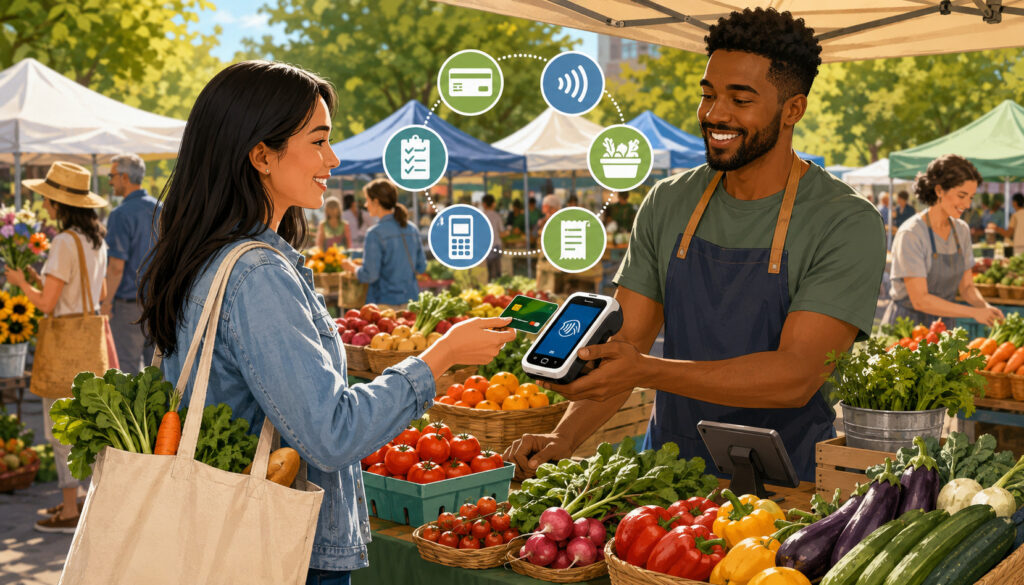
Setting up farmers market EBT payments generally begins with authorization. A market or individual vendor may need to apply, provide business and ownership information, demonstrate eligibility, and receive approval before processing SNAP benefits.
After authorization, the operator must arrange suitable EBT payment processing for farmers markets. This may involve an approved terminal, a processor connection, a mobile device, a receipt printer, or a central market booth.
The basic setup process may include:
- Determine whether authorization will be market-level or vendor-level.
- Review eligibility and stocking requirements.
- Complete the required application.
- Wait for approval before accepting benefits.
- Select compatible EBT equipment.
- Establish a bank account and settlement process where required.
- Create written market procedures.
- Train staff and participating vendors.
- Design tokens or scrip if using a central system.
- Install signs and customer instructions.
- Test equipment and reports.
- Begin with careful transaction monitoring.
Approval requirements and technology arrangements can differ, so operators should confirm current program instructions rather than purchasing equipment first.
Market-Level SNAP Setup
In a market-level system, the market organization typically operates one or more central EBT terminals. Customers visit the designated booth and request an amount of SNAP market currency.
After the EBT transaction is approved, the customer receives tokens or scrip that can be spent with eligible vendors. Vendors accept the market currency only for approved products and later return it to the market for reimbursement.
This model has several advantages:
- Individual vendors may not need separate terminals.
- Customer education can occur in one location.
- Market management can centralize reporting.
- Smaller vendors can participate more easily.
- The market can coordinate nutrition incentives.
However, the model also creates significant market manager responsibilities. The organization must control token inventory, train vendors, prevent improper redemption, reconcile transactions, and reimburse vendors accurately.
The booth should be easy to find, accessible, and open during all published market hours.
Vendor-Level SNAP Setup
In a vendor-level system, an authorized vendor processes EBT card payments directly at the booth. The customer selects eligible items, the vendor enters the amount, and the customer completes the transaction using the terminal.
Direct processing can create a simple customer experience because no token exchange is required. It may also give the vendor immediate transaction records and direct settlement information.
However, each participating vendor may need its own authorization, equipment, connectivity, training, and reconciliation procedures. This can increase complexity and cost for small or seasonal sellers.
Vendor-level processing is often most practical when:
- The vendor attends several markets.
- SNAP-eligible products make up a large share of sales.
- The vendor has consistent staff.
- Reliable mobile connectivity is available.
- The vendor already uses organized inventory and sales reporting.
A vendor should confirm whether its chosen farmers market POS system supports approved EBT processing or needs a separate terminal.
SNAP EBT Equipment and POS Features to Review
The right equipment should support secure, reliable transactions without making checkout unnecessarily difficult. Markets should evaluate functionality rather than selecting a terminal based only on its initial price.
Important features may include:
- Approved EBT transaction support.
- Mobile or countertop operation.
- Cellular and Wi-Fi connectivity.
- Strong battery life.
- PIN entry privacy.
- Printed or digital receipts.
- Transaction history.
- Settlement reports.
- Staff login controls.
- Refund or correction functions.
- Token reporting support.
- Exportable reconciliation data.
- Responsive technical assistance.
A market POS system used for regular payments may help track product sales, but it does not automatically become an EBT terminal. SNAP support should be confirmed explicitly.
Markets should also ask whether software updates, replacement equipment, data plans, accessories, or support services involve additional costs.
EBT Terminals and Mobile POS Tools
An EBT terminal for farmers markets may be a standalone handheld device, a countertop terminal, or a mobile unit connected to a smartphone or tablet.
Portability is valuable because outdoor markets may not have fixed checkout counters. Equipment should be easy to carry, protect from weather, and secure when staff step away.
Connectivity should be tested at the actual market location. A device that works well in an office may struggle beneath trees, between buildings, or in a crowded event area.
Power planning is equally important. Markets should arrive with fully charged devices, charging cables, and backup batteries. A weather-resistant container can protect equipment, receipt paper, and cables.
Markets considering broader payment technology can review contactless payment options for market vendors while keeping EBT processing separate from ordinary card and wallet acceptance.
Reporting and Reconciliation Features
Reliable reporting makes it easier to compare EBT transactions, token issuance, token redemption, vendor reimbursement, refunds, and settlement deposits.
At minimum, managers should be able to identify:
- Number of successful transactions.
- Total SNAP value processed.
- Voided or corrected transactions.
- Time and date of each transaction.
- Terminal or staff account used.
- Settlement totals.
- Token value issued.
- Token value redeemed.
- Amount owed to each vendor.
Reports should be saved in an organized format. Access should be limited to authorized staff, and sensitive information should not be copied into informal spreadsheets unnecessarily.
A market that operates multiple days or locations should label records consistently. Good reconciliation protects both the market and its vendors from errors.
Managing Tokens, Scrip, and Market Currency
Tokens and scrip allow a central market terminal to support many vendors. They represent value already deducted from a customer’s SNAP account, so they must be controlled carefully.
The market should establish rules covering:
- Token design and denomination.
- Issuance procedures.
- Eligible uses.
- Participating vendors.
- Vendor redemption.
- Storage and transportation.
- Lost or damaged tokens.
- Refunds or unused value.
- End-of-day counting.
- Record retention.
SNAP market currency should be distinguishable from debit tokens, promotional coupons, and nutrition incentives. Different colors, shapes, or printed designs can prevent confusion.
Vendors should never provide cash change for SNAP tokens. If a token denomination exceeds the price of an item, procedures should follow the approved market system.
How Token Systems Help Multi-Vendor Markets
A token system reduces the need for every farmer or food vendor to operate a separate EBT terminal. Customers process their card once and then shop across the market.
This can be particularly helpful for small vendors who attend only a few market dates or have limited technology. It also lets the market manager provide consistent customer instructions.
For the system to work smoothly, eligible vendors should display a recognizable sign. Customers should not have to ask at every booth whether tokens are accepted.
Market currency should be easy to handle but difficult to duplicate. Reusable wooden or plastic tokens may last several seasons, while printed scrip can include serial numbers or other controls.
Managers should also explain whether tokens expire, may be used on a later market day, or can be returned according to approved procedures.
Token Tracking and Vendor Reimbursement
Every token issued creates a financial and reporting responsibility. The market should compare the value issued through EBT transactions with the value redeemed by vendors and the value still circulating.
Vendor redemption forms should include:
- Vendor name or identification number.
- Market date.
- Number of tokens by denomination.
- Total value submitted.
- Staff verification.
- Reimbursement amount.
- Payment date.
- Payment reference.
Two staff members may count large token batches to reduce errors. Tokens should then be secured before they are returned to inventory.
Reimbursement timing should be stated in vendor agreements. Farmers and small food businesses often depend on timely market income, so unexplained delays can damage trust.
Compliance and Recordkeeping for SNAP at Farmers Markets
Compliance protects customer benefits, vendor income, and market authorization. Every participating person should understand that SNAP funds may be accepted only through approved procedures and for eligible items.
The market should avoid treating training as a one-time task. Vendors change products, temporary employees join booths, and program guidance may be updated.
Written materials should address:
- Eligible and ineligible items.
- Proper EBT card handling.
- PIN privacy.
- Token acceptance.
- Cash-change restrictions.
- Refunds and corrections.
- Customer questions.
- Suspected misuse.
- Recordkeeping.
- Vendor reimbursement.
- Equipment security.
- Reporting responsibilities.
These materials provide general operational support, but official instructions should control whenever there is a conflict.
Why Eligible-Item Training Matters
A vendor may sell qualifying food beside ineligible merchandise, making accurate item separation essential. Staff who do not understand eligibility may unintentionally process a restricted product or incorrectly refuse an eligible purchase.
Both outcomes harm the customer experience. An improper approval creates compliance risk, while an improper refusal may prevent a household from buying food it is allowed to purchase.
Training should use examples from each vendor’s actual inventory. A generic list is useful, but booth-specific examples are easier to remember.
Employees should also know who can answer uncertain questions. It is better to pause and verify than to guess.
Managers can review current retailer notices regularly because official standards, restrictions, and implementation guidance may change. Recent official notices have included updates affecting retailer stocking standards, reinforcing the need for periodic review. rds Markets Should Maintain
Recordkeeping helps demonstrate that transactions and vendor reimbursements were handled consistently. The exact retention requirements should be confirmed through official program guidance.
Useful operational records may include:
- EBT transaction reports.
- Settlement statements.
- Token issuance logs.
- Token redemption records.
- Vendor reimbursement forms.
- Void and refund documentation.
- Equipment inventory.
- Staff training records.
- Vendor participation agreements.
- Written procedures.
- Incident notes.
- Customer service records.
- Outreach materials.
- Incentive program reports.
Records should be stored securely and organized by date or market session. Access should be limited to people who need the information.
Markets should avoid recording full card numbers, PINs, or other sensitive customer data in local files.
Customer Experience Benefits of SNAP EBT at Farmers Markets
SNAP acceptance can make a market easier and more comfortable to use. Customers gain access to another source of fresh food, while the market demonstrates that different payment methods are welcome.
The customer experience depends on more than whether a terminal is available. The process should be easy to locate, understand, and complete.
A positive experience includes:
- Visible acceptance signs.
- Clear product prices.
- Simple token instructions.
- Short and organized checkout lines.
- Privacy during PIN entry.
- Staff who answer questions respectfully.
- Consistent rules across vendors.
- Easy identification of eligible booths.
- Reliable terminal operation.
Customers should not be required to explain why they use SNAP or be separated unnecessarily from other shoppers.
Signage and Customer Education
Good signs answer common questions before customers reach the payment booth. They should explain where EBT cards are processed, what customers receive, where market currency can be used, and how to identify participating vendors.
Useful signs may include:
- “SNAP EBT accepted here.”
- A map showing the EBT booth.
- Token values and appearance.
- Participating vendor symbols.
- General eligible-item examples.
- Market hours and terminal closing time.
- Nutrition incentive instructions where applicable.
Information should also be available through the market website, social pages, newsletters, and community partners.
Avoid filling signs with detailed policy language. Customers need clear operational directions, while staff can keep more detailed guidance behind the booth.
Respectful and Simple Checkout
Staff should treat SNAP payment as an ordinary part of market operations. They should speak quietly when discussing balances, transaction problems, or item eligibility.
The customer should enter the PIN without observation. Staff should never ask for the PIN or write it down.
When a transaction is declined, employees should avoid making assumptions. They can explain the available terminal message and suggest approved next steps without discussing the issue publicly.
Vendors should also avoid comments about how much a customer purchases or how benefits are used. Respectful service encourages trust and repeat visits.
A simple process benefits everyone because it reduces lines, confusion, and staff workload.
Marketing SNAP Acceptance at Farmers Markets
A market cannot realize the full benefits of accepting SNAP if eligible customers do not know the program is available. Promotion should begin before the market season and continue regularly.
Useful communication channels include:
- Market websites.
- Social media posts.
- Email newsletters.
- Vendor booth signs.
- Community bulletin boards.
- Clinic and school newsletters.
- Food access organizations.
- Local libraries.
- Neighborhood associations.
- Public transportation information boards.
- Posters near the market entrance.
Messages should explain what customers need to know: the market location, operating hours, where to use an EBT card, and what types of eligible foods are available.
Reaching SNAP Customers Through Community Channels
Community partners can help markets reach people who may not follow the market online. Food assistance offices, nutrition educators, health clinics, senior centers, housing organizations, schools, and local nonprofits may be able to share accurate information.
Partners should receive updated details rather than a generic statement that SNAP is accepted. Provide the market address, schedule, transportation information, EBT booth location, and any approved incentive information.
Markets can also invite community educators to conduct cooking demonstrations or seasonal food activities. These partnerships can make the market more useful without pressuring customers to purchase particular products.
Outreach should be repeated because household schedules, benefit participation, and market seasons change.
Avoiding Confusing or Overly Promotional Messaging
SNAP outreach should be factual and respectful. Avoid exaggerated claims, pressure-based language, or messages that suggest customers are receiving a special favor.
A useful announcement might state that EBT card payments are accepted for eligible foods and explain where customers can process the transaction.
The market should not promise that every product qualifies. It should also distinguish standard SNAP funds from separate matching incentives.
Important details include:
- Date and time.
- Exact market location.
- Types of food vendors present.
- EBT booth location.
- General eligibility information.
- Token or scrip instructions.
- Contact information for operational questions.
Consistent wording across websites, signs, and partner materials reduces confusion.
Operational Challenges of Accepting SNAP at Farmers Markets
SNAP acceptance can provide substantial community value, but it introduces additional work. Markets should plan for technology failures, staff turnover, customer questions, token control, and vendor reimbursement.
Common challenges include:
- Weak cellular service.
- Limited power access.
- Terminal setup problems.
- Long lines at a central booth.
- Confusion about eligible products.
- Lost or mixed tokens.
- Incomplete vendor forms.
- Delayed reconciliation.
- Insufficient staffing.
- Changes in market rules.
- Inconsistent signs.
- Unclear refund procedures.
These challenges are manageable when responsibilities are assigned clearly and problems are reviewed after each market.
Technology and Connectivity Challenges
Outdoor markets may operate in locations where cellular or Wi-Fi coverage is inconsistent. Weather, crowds, building materials, and network congestion can affect terminal performance.
Managers should test the terminal in the exact booth location before opening. If possible, test more than one network connection and identify an alternate spot with stronger service.
Equipment plans should include:
- Fully charged terminals.
- Backup battery packs.
- Charging cables.
- Spare receipt paper.
- Protective covers.
- Support contact information.
- Restart instructions.
- A documented outage procedure.
Do not assume that offline credit-card functionality applies to SNAP EBT transactions. Confirm approved procedures before processing any transaction during an outage.
Vendor Training and Consistency
A centralized program depends on every participating vendor following the same rules. One booth accepting ineligible products or handling tokens incorrectly can create problems for the entire market.
Training should cover booth signs, eligible items, token appearance, prohibited exchanges, reimbursement forms, and customer questions.
Managers can provide a one-page reference sheet and review it during pre-season meetings. Temporary staff should receive the same information before handling payments.
Periodic spot checks can identify confusion without creating an adversarial atmosphere. The goal is consistent service and accurate records.
Best Practices for Accepting SNAP at Farmers Markets
The following practices can make a farmers market EBT program more reliable:
- Confirm authorization before accepting SNAP.
- Review current eligible-item guidance.
- Train every vendor and staff member.
- Use visible acceptance signs.
- Keep customer instructions simple.
- Protect PIN privacy.
- Test equipment before opening.
- Maintain backup power.
- Track tokens by denomination.
- Separate SNAP tokens from other market currency.
- Reconcile transactions after every market.
- Reimburse vendors on a defined schedule.
- Document refunds and corrections.
- Secure equipment and records.
- Review official guidance regularly.
- Communicate operational changes promptly.
Markets should adapt procedures to their size and staffing while maintaining reliable controls.
Creating a SNAP Market Procedure
A written procedure turns general responsibilities into repeatable steps. It should explain who opens the EBT booth, checks equipment, processes cards, issues tokens, answers questions, closes the terminal, counts currency, and completes reports.
The procedure should also cover:
- Opening cash and token inventory.
- Customer transaction steps.
- Declined transactions.
- Receipt handling.
- Nutrition incentives.
- Vendor token acceptance.
- Refunds.
- Equipment outages.
- End-of-day counting.
- Vendor reimbursement.
- Record storage.
- Incident escalation.
Managers should review the procedure with staff before the season and update it when equipment or rules change.
Training Vendors Before Market Day
Vendor training should occur before the first busy market session. Waiting until a customer presents a token creates unnecessary pressure.
Training should explain:
- Which products at the booth are eligible.
- Which market currency represents SNAP value.
- Whether tokens may be carried forward.
- Whether change can be given.
- How vendors submit tokens.
- When reimbursement occurs.
- How corrections are reported.
- Who answers eligibility questions.
- How customer privacy should be protected.
A short practice session can be more effective than a long lecture. Vendors can examine sample tokens, complete a redemption form, and review examples from their own product lists.
Common Mistakes to Avoid With Farmers Market SNAP Payments
Many SNAP program difficulties result from preventable operational mistakes. Unclear signs, incomplete training, weak token controls, and delayed reconciliation can undermine an otherwise valuable program.
Common errors include:
- Beginning transactions before authorization.
- Treating every food-related item as eligible.
- Accepting market currency for non-food merchandise.
- Providing cash change for SNAP tokens.
- Failing to protect PIN entry.
- Mixing token types.
- Losing vendor redemption forms.
- Waiting several weeks to reconcile totals.
- Failing to test the terminal.
- Giving customers conflicting instructions.
- Promoting an incentive without explaining its limits.
Mistakes should be corrected promptly and used as training opportunities.
Not Explaining the SNAP Process Clearly
A customer arriving at an unfamiliar market may not know whether to visit a central booth or pay vendors directly. Poor instructions can lead to unnecessary walking, long lines, or abandoned purchases.
Signs should be visible from the entrance. Participating booths should use the same symbol, and staff should give consistent directions.
Web and social media information should match the process used on-site. If the EBT booth moves, online directions and physical signs should be updated.
Simple explanations create confidence and reduce repetitive questions for staff.
Poor End-of-Day Reconciliation
Delaying reconciliation makes errors harder to investigate. Staff may forget why a transaction was voided, where a token batch came from, or which vendor submitted a correction.
After each market, compare:
- EBT transaction total.
- Value of SNAP tokens issued.
- Value of tokens redeemed.
- Remaining token inventory.
- Vendor reimbursement forms.
- Refunds and voids.
- Settlement reports.
- Incentive currency totals.
- Equipment notes.
Differences should be documented and reviewed while information is still fresh.
SNAP Acceptance Checklist for Farmers Markets
| Checklist Area | What to Check | Why It Matters |
| Authorization | Confirm participation and approval requirements | Supports proper program participation |
| Eligible items | Train vendors on qualifying foods | Prevents incorrect transactions |
| Equipment | Test the EBT terminal and connections | Keeps checkout moving |
| Signage | Display clear SNAP acceptance instructions | Helps customers understand the process |
| Token system | Review issuing and redemption rules | Supports accurate multi-vendor tracking |
| Vendor records | Prepare reimbursement forms and totals | Helps ensure accurate payouts |
| Security | Protect equipment, tokens, and records | Supports secure operations |
| Customer service | Provide respectful and consistent assistance | Improves shopper confidence |
| Reconciliation | Compare transactions, tokens, and settlements | Reduces reporting errors |
| Community outreach | Share accurate participation information | Helps eligible customers find the market |
How to Use the Checklist Before Each Market Season
Managers should complete a full program review before the first market date. Confirm that authorization remains active, equipment functions correctly, vendor agreements are current, and signs reflect the actual process.
Review each vendor’s products and identify possible eligibility questions. Replace worn tokens, update staff contact information, and test settlement reports.
The checklist should also be used when the market changes location, adds vendors, introduces an incentive, or adopts a new payment system.
A pre-season review prevents small administrative issues from becoming customer-facing problems.
Records to Keep After Each Market Day
After the market closes, store transaction reports, token logs, reimbursement forms, settlement records, equipment notes, and incident documentation in a consistent location.
Digital files should use predictable names such as the market date and location. Paper forms should be filed chronologically and protected from damage.
Managers should also keep notes about recurring customer questions. If many shoppers misunderstand the same rule, signage or outreach materials may need improvement.
Recordkeeping is not only an administrative obligation. It provides information that can improve staffing, equipment placement, vendor training, and future market planning.
How to Choose Farmers Market POS Systems for SNAP EBT Payments
A farmers market POS system should support the market’s actual payment structure. Equipment price is only one factor. Reliability, reporting, training, connectivity, and customer flow may have a greater impact during busy market hours.
Markets should review:
- Verified SNAP EBT support.
- Standard debit and credit card acceptance.
- Mobile terminal compatibility.
- Receipt options.
- Transaction history.
- Settlement reports.
- Staff permissions.
- Product-level reporting.
- Vendor reimbursement tools.
- Token or incentive tracking.
- Battery performance.
- Cellular and Wi-Fi options.
- Equipment replacement policies.
- Customer support availability.
- Setup and transaction costs.
- Ease of use.
A payment tool should not be described as EBT capable unless the relevant transaction support has been confirmed.
Questions to Ask Before Choosing a POS or EBT Setup
Before selecting technology, ask:
- Does the system process SNAP EBT transactions?
- Is the equipment approved for the intended program?
- Can it separate eligible and non-eligible items?
- Does it support central market or vendor-level operation?
- Are receipts available?
- What settlement reports are provided?
- Can reports be exported?
- How are refunds and corrections handled?
- What connectivity is required?
- Does the device include cellular service?
- How long does the battery last?
- What equipment and service fees apply?
- Is training included?
- When is technical support available?
- Can staff accounts have different permissions?
- Does the system support incentive or token reporting?
Documenting answers makes it easier to compare systems fairly.
Comparing Simplicity, Reliability, and Reporting
A low-cost terminal may become expensive if transactions fail frequently, reports are difficult to interpret, or staff require extensive support.
Simplicity matters because market staff may be seasonal or volunteer-based. The system should allow trained employees to complete transactions without navigating unnecessary screens.
Reliability matters because customers often shop during a short market window. A terminal outage during peak hours may prevent eligible shoppers from completing purchases.
Reporting matters because market managers must reconcile transactions and reimburse vendors. A system that produces clear daily summaries can reduce administrative work and errors.
The best setup is the one that consistently supports authorized transactions, clear customer service, and accurate records.
Frequently Asked Questions
What are the benefits of accepting SNAP at farmers markets?
The benefits of accepting SNAP at farmers markets can include a wider customer base, additional sales opportunities for eligible vendors, improved access to fresh food, stronger community partnerships, and more inclusive market participation.
SNAP acceptance can also connect household food benefits with local farms and food producers. Results depend on clear outreach, reliable equipment, proper authorization, and consistent market operations.
How does SNAP EBT work at farmers markets?
Customers use an EBT card at an approved terminal. They may pay an authorized vendor directly or receive market tokens or scrip from a central booth.
The transaction amount is deducted from the customer’s available SNAP balance. In a token system, participating vendors later submit the market currency for reimbursement.
Can individual vendors accept SNAP at farmers markets?
An individual vendor may be able to accept SNAP directly when properly authorized and equipped. The vendor must follow applicable retailer rules and process only eligible purchases.
Some markets instead use one central authorization and token system. Vendors should confirm which structure applies before purchasing equipment or advertising EBT acceptance.
What foods can customers buy with SNAP at farmers markets?
Common qualifying products include fruits, vegetables, meat, poultry, fish, dairy products, breads, cereals, nonalcoholic beverages, seeds, and plants that produce food.
Hot-at-sale foods, alcohol, tobacco, supplements, pet food, and non-food products are generally excluded. Vendors should check current official guidance for unusual or mixed products.
What equipment is needed for SNAP payment processing?
The market or vendor generally needs an approved EBT terminal or compatible payment system, reliable connectivity, power, and access to transaction and settlement reports.
A standard card reader does not necessarily process SNAP EBT. The operator should confirm support before selecting equipment.
How do farmers market token systems work?
A customer processes an EBT card at a central booth and receives approved market currency equal to the authorized amount. The customer spends those tokens with participating food vendors.
Vendors submit accepted tokens to the market manager, who verifies the amounts and reimburses them according to the market’s procedures.
What should markets review before accepting SNAP EBT?
Markets should review authorization, eligible product requirements, equipment, connectivity, staffing, token procedures, vendor agreements, customer signs, reimbursement, security, reporting, and reconciliation.
Specific questions should be checked against current official program guidance before the market begins processing benefits.
Conclusion
The benefits of accepting SNAP at farmers markets can reach vendors, shoppers, market managers, and the wider community. SNAP acceptance can help eligible customers buy fresh foods, expand the audience for local farm products, create additional sales opportunities, and make community markets more accessible.
These benefits depend on responsible implementation. Markets need proper authorization, reliable SNAP payment processing, accurate eligible-item guidance, trained vendors, visible signs, respectful customer service, and secure payment handling.
Central token systems must be managed with particular care. Issued and redeemed market currency should be tracked, vendor reimbursements should be timely, and transaction totals should be reconciled after every market.
Individual vendors also need dependable procedures for separating eligible and non-eligible products, protecting customer privacy, maintaining records, and responding to transaction problems.
When these responsibilities are handled consistently, SNAP EBT at farmers markets becomes more than an added checkout option. It becomes a practical connection between food assistance, fresh local products, farm income, and community food access.